A 200×300cm rug disappears under most BTO living room layouts—it’ll barely graze the front legs of a standard 3-seater sofa. Condo units with open-plan designs can handle 240×340cm rugs, but measure walkways first: HDB corridors demand 45cm clearance from walls for daily squeezepast moments. Landed homes cheat the rules—centered rugs float freely in double-volume spaces, though kids and pets still drag the corners askew.
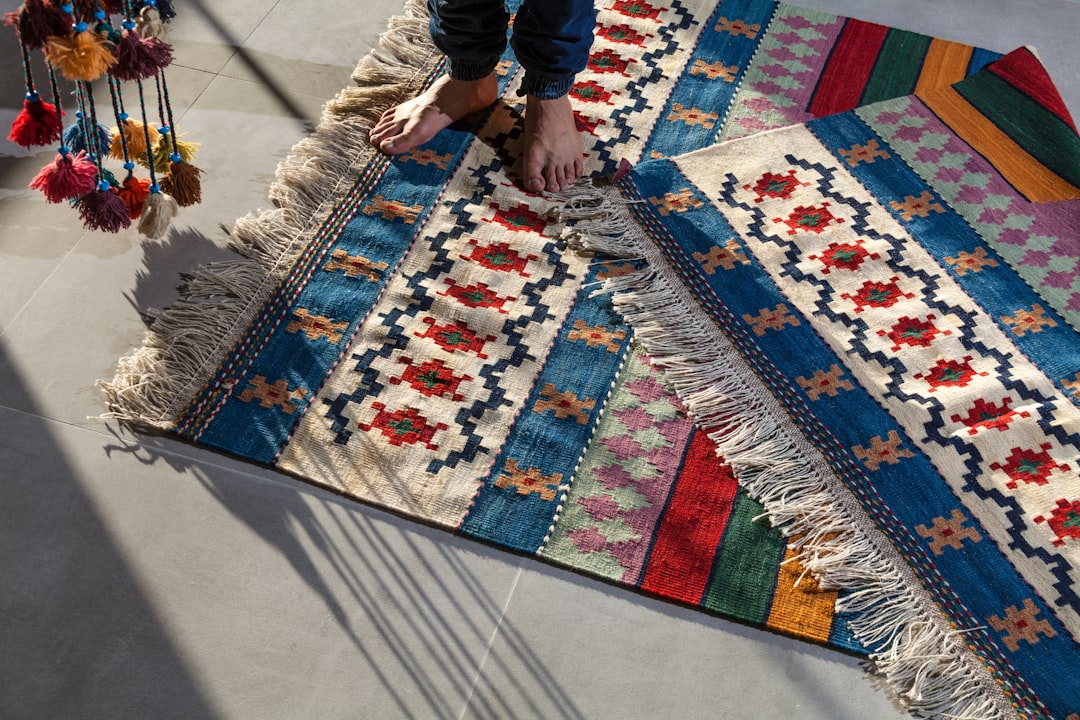
Patterned rugs pull double duty in compact spaces. A geometric print camouflages hawker-centre curry stains better than solids; tribal motifs visually stretch narrow HDB layouts when aligned parallel to the longest wall. Watch the pile height—anything over 1.5cm becomes a tripping hazard when placed under recliners or extendable dining tables.
Natural fibres like jute fray along edges in humid Singapore, while polyester blends yellow under afternoon sun. Rotate wool rugs quarterly if your west-facing condo gets that brutal 4pm glare—uneven fading turns herringbone patterns into abstract art. For high-traffic zones near shoe racks, flatweave cotton survives daily abrasion better than plush knotted styles.
The real test? Crouch down. If you can’t see at least 30cm of flooring around the rug’s perimeter in an HDB, it’s swallowing the room whole. Condo dwellers might get away with wall-to-wall coverage—until the aircon servicing guy needs to lift your teak parquet access panel.
In Singapore’s monsoon season, humidity hovers around 85%, turning wool rugs into breeding grounds for mould — they absorb moisture like a sponge. Polypropylene, on the other hand, laughs in the face of dampness; it’s hydrophobic, resistant to mildew, and dries quickly after a spill. Synthetic Kashan rugs, for instance, handle this climate with ease, making them a practical choice for landed homes or condos with open-air balconies.
Jute, while eco-friendly and stylish, tends to shed fibres in air-conditioned rooms — not ideal for families with young children crawling on the floor. It’s also prone to discolouration when exposed to spills, so it’s best avoided near dining areas where food and drinks are a daily hazard. For a low-maintenance option that still adds warmth, polypropylene’s durability wins out.
Patterned rugs in synthetic materials offer another advantage: they hide stains better than solid colours, a boon for households with kids or pets. Pairing them with marble or tiled flooring creates visual zoning without sacrificing practicality — especially in HDB living rooms where space is tight. And unlike wool, they won’t trap moisture or develop that musty smell after weeks of rain.
For those refreshing their living room layout, polypropylene rugs strike a balance between aesthetics and resilience — they’re lightweight, easy to clean, and come in designs that mimic pricier materials. Just don’t expect them to feel as plush underfoot; that’s the trade-off for humidity resistance.
Front legs on, back legs off—that’s the golden rule for sofas on patterned rugs in compact spaces. A 160x230cm rug under just the front third of a 2-seater visually extends the seating zone without swallowing the room. Leave 30-45cm of bare flooring around edges to maintain proportion in 12 sqm layouts. This partial anchoring trick works especially well with geometric prints, where the pattern’s lines can continue the illusion of depth beyond the rug’s actual borders.
Horizontal stripes widen narrow HDB living rooms, while vertical lines pull ceilings higher in low-floor condos. For L-shaped layouts common in 4-room BTOs, diagonal stripes from the corner outward can optically expand two zones simultaneously. Avoid concentric circles in rectangular rooms—they exaggerate the bowling-alley effect. Instead, try irregular organic patterns like fern motifs that break sightlines without demanding perfect centering.
Oversized Persian medallions belong in landed property living rooms, not 12 sqm flats where they’ll dominate. Scale down to 60-80cm diameter motifs for HDBs, ensuring at least two full repeats fit between furniture legs. Modern interpretations like abstract hexagons or quartered circles work better than traditional florals, especially when paired with low-profile mid-century furniture. The goal is pattern recognition without visual overwhelm when viewed from 2 meters away—the typical HDB viewing distance.
High-contrast patterns read as heavier visual weight, pulling zones forward in the room’s composition. For receding effects in tight spaces, stick to tonal variations within the same color family—think navy-on-light-blue rather than black-on-white. Warm hues advance toward the eye, cool hues retreat; use this to manipulate perceived distances between seating clusters. In north-facing rooms common in Eunos and Bedok flats, mustard or terracotta accents prevent the space from feeling cavernous.
Pair flat-woven geometric rugs with plush furniture to create tactile hierarchy within small zones. A ribbed wool herringbone rug under a velvet sofa defines the seating area through material interplay, not just pattern. For households with young children, consider polypropylene rugs with embossed 3D textures—they hide crumbs better than smooth surfaces while maintaining the visual zoning effect. Just avoid shag piles in compact spaces; they visually eat up precious centimeters.
Kids spill Milo. Dogs track mud. That’s life in Singapore’s landed homes and compact condos alike. A low-pile cotton rug with stain-resistant treatment handles both better than high-maintenance wool—just check the backing thickness at Megafurniture’s Tampines showroom, where 8mm non-slip pads come standard. Darker geometric patterns camouflage stains between cleanings; beige shows every speck of curry powder. Tassels are a tripping hazard for crawlers—opt for bound edges instead. For HDB flats with marble or tile floors, a rug’s grip matters more than its thread count. Test it: if you can’t slide a credit card under the corner after stepping on it, neither will your toddler. Spills happen fast. Blot don’t rub—pressing a microfiber cloth into fresh stains prevents them from setting. Keep a spray bottle of 1:3 white vinegar to water mix nearby for quick spot cleaning. Cotton rugs dry faster than synthetics in our humidity, though they’ll still need a proper wash every few months. The best childproof rug is one you won’t panic over. That means machine-washable, under S$300, and sized to fit your space without becoming a permanent obstacle course. Measure your living room’s walking paths first—2.4m x 3.4m works for most 5-room HDB layouts, while landed homes can go bigger. Browse
rugs with spill-friendly weavesthat won’t trap crumbs in deep piles. Some parents swear by indoor-outdoor polypropylene rugs for the play area. They’re practically indestructible, but feel like plastic grass underfoot—fine for the kids’ corner, less so for the sofa zone. Layer a softer cotton rug where adults actually sit.
Layering patterned rugs: A step-by-step guide for landed homes (how_to)
The patterned rug that looked perfectly scaled in the showroom will shrink by 30% once you get it home—that’s the golden rule of Joo Seng warehouse visits. Walk the full perimeter of display samples in socks first, then shoes; anything underfoot thicker than 1.5cm creates a tripping hazard when layered over existing flooring. Large geometric motifs turn claustrophobic in 4m-wide HDB living rooms, while high-pile shags collect crumbs like Velcro in homes with toddlers. Test for pattern bleed by standing three meters back—the distance from a typical sofa to a TV console. What reads as subtle texture up close becomes visual noise at this range, especially with Singapore’s harsh downlighting. Megafurniture’s showroom at Tampines keeps samples near floor lamps for this reason; their
rug collectionincludes low-pile polypropylene options that don’t show vacuum marks. Dark borders on rugs create phantom walls in open-concept layouts—fine for landed properties, but overwhelming in BTO flats where every centimeter counts. The sweet spot for most HDB living rooms is a 200x290cm rectangle with a non-directional pattern, leaving 60cm of bare flooring exposed on all sides. That’s enough to define a seating zone without making your 36sqm space feel like a carpeted box. Watch for pattern distortion when rugs are partially obscured under furniture. A medallion design centered under a coffee table just looks like random blobs, while stripes running perpendicular to your sofa can make the whole room feel lopsided. Better to choose something that reads as a solid color from the dining area—a trick that works with densely knotted tribal designs or tone-on-tone damasks. Natural fibers like jute and sisal score points for sustainability but stain irrevocably under hawker center takeaway mishaps. Most homeowners end up replacing them within two years—just long enough for the fibers to develop permanent dents from chair legs.
Match or contrast rug colors with room palettes for harmony or drama. Use muted tones for calming zones and vibrant hues for energetic spaces. Test samples under natural and artificial light for consistency.
Layer patterned rugs over neutral bases for depth. Mix textures like wool and jute to elevate tactile interest. Ensure top layers are non-slip and proportionally balanced.
Choose rugs with geometric or organic patterns to define zones. Bold designs create focal points, while subtle repeats enhance flow. Ensure patterns complement existing furniture and decor for cohesion.
Align rug size with zone dimensions—oversized for lounges, compact for entryways. Center patterns under key furniture to anchor the space. Avoid overcrowding by leaving floor borders exposed.

Resale flat buyers often fall for the 160×230cm rug trap — it’s just too small for L-shaped sofas. The edges end up floating awkwardly, leaving the seating zone half-covered and the room feeling disjointed. In many HDB living rooms, a 200×300cm rug works better; it anchors the sofa fully and extends enough to define the space without overwhelming it.
Cleaning choices can trip buyers up, too. Wool rugs, while luxurious, typically cost $120+ for dry cleaning — a recurring expense that adds up. Synthetic blends, on the other hand, fit most HDB washing machines and can be cleaned at home for a fraction of the price. For families with young kids or pets, practicality often beats prestige.
Material matters as much as size. Polypropylene rugs are a favourite for their durability and ease of care, while jute adds texture but stains easily. In a humid climate like Singapore’s, synthetic blends tend to hold up better over time, resisting mould and fading.
Finally, don’t overlook the rug pad. A good non-slip pad not only keeps the rug in place but also adds cushioning, especially on hard flooring like marble or tiles. It’s a small investment that makes a big difference in comfort and longevity.
For those refreshing their living room, a patterned rug can be a high-impact piece — but getting the size and material right ensures it’s a lasting one.
That rolled-up rug you just unboxed won’t lie flat for three days — Singapore’s humidity makes fresh deliveries curl like prawn crackers. Megafurniture staff recommend booking deliveries before long weekends; their Tampines showroom logs 40% more same-day unrolling requests for landed properties where rugs can be laid straight in driveways. HDB dwellers get the same service if lifts fit the 240×340cm jute rolls (measure your lift shaft against the stairwell width — most pre-2016 BTOs clear it). Heat accelerates the process, but don’t cheat it. A patterned wool rug left to settle properly won’t trip corners after monsoon season, whereas rushed synthetics develop permanent waves. Staff suggest weighting edges with hardcover books for 72 hours — encyclopedias work, but most clients use stacked Somnuz® mattress toppers from the spare room. Landscape orientation matters. A 90×150cm accent rug flipped weekly will flatten faster than a room-sized piece, but the creases set deeper. Condo owners report success parking their car over rolled corners for an afternoon; HDB corridors achieve similar results with wet towels and afternoon sun. The unrolling ritual reveals quality. Cheap polypropylene snaps straight like a shower curtain, while hand-knotted wool relaxes into slight ripples that disappear under furniture. One Joo Seng client waited out National Day weekend with her Persian rug pinned under sofa legs — by Tuesday, the medallions aligned perfectly with her coffee table. Browse Megafurniture’s
rug collectionand factor in settling time before Deepavali or CNY visits. No shortcuts for natural fibres. That stubborn corner curling up near your balcony door? It’s not defective — it’s just waiting for the next thunderstorm to finally give up the fight.

Polypropylene rugs under dining tables? Smart move. They’re stain-resistant, easy to clean, and hold up well against spills — especially in homes with kids or frequent hosting. Pair them with lighter furniture finishes, and they’ll blend seamlessly without stealing the spotlight.
Wool rugs, though luxurious, aren’t ideal under ceiling vents. The uneven airflow can cause the edges to dry faster than the centre, leading to warping over time. If you’re set on wool, consider shifting the rug a few centimetres away from the vent’s direct path — it’s a small adjustment that saves the rug’s shape.
In many Singapore homes, dining areas double as multi-purpose spaces. A rug here anchors the table visually but needs to be practical. Polypropylene’s durability makes it a favourite for high-traffic zones, while its synthetic nature resists moisture — a plus in humid climates.
One trick: measure the rug to extend at least 60cm beyond the table’s edges. This ensures chairs stay on the rug even when pulled out, avoiding that awkward half-on, half-off look. For condo layouts with limited space, a 160×230cm rug typically works well under a standard six-seater table.
Ceiling vents are often overlooked in rug placement, but they’re a factor worth considering. If your dining area shares space with an AC unit, test the airflow before committing to a rug. A quick hand check can save you from uneven wear — and a costly replacement down the line.
The rug’s border alignment with floor tiles matters more than most realise—a half-centimetre mismatch in grid patterns draws the eye downward, shrinking an already compact HDB living room. One Tampines homeowner discovered this the hard way when her new geometric rug’s chevrons clashed with her rectangular floor tiles, creating visual static that made the space feel disjointed. At Megafurniture’s Joo Seng showroom, staff use augmented reality to overlay rug mockups on customers’ room photos, checking for pattern harmony before purchase.
Bring your floor measurements and a top-down photo—most smartphones capture adequate detail if taken from ladder height. Sales associates typically flag two risks: busy patterns competing with intricate flooring (common in heritage-inspired condos), or large-scale motifs overwhelming narrow spaces (like many 4-room BTO layouts). Their digital preview tool accounts for lighting conditions too; that ivory herringbone rug might read yellow under warm LED strips.
For tile-heavy homes, consider low-contrast borders or organic shapes—a faded Persian-style rug’s irregular edges soften the rigidity of marble grids. One Eunos family paired their charcoal floor tiles with a rug featuring blurred indigo motifs, creating depth without strict alignment. Megafurniture’s collection includes transitional designs that bridge contemporary and traditional aesthetics, useful when coordinating with existing furniture.
The final check? View the rug from your primary seating area—what looks balanced at the showroom’s 3-metre sightlines might fragment at 2 metres. Sales staff recommend marking your floor with painter’s tape to simulate dimensions, especially for L-shaped layouts where rugs anchor conversation zones. A 200×290cm rug often works better than standard sizes in Singapore’s elongated living rooms.