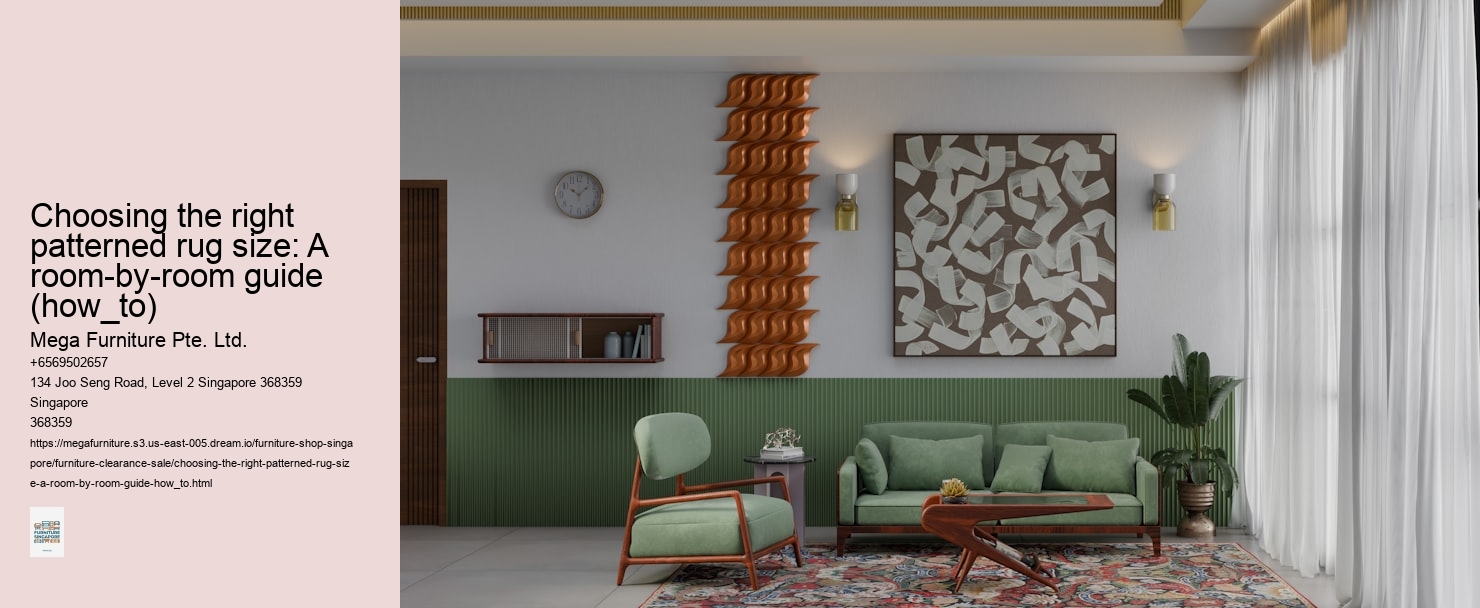
A patterned rug that's too large for a 12 sqm HDB living room swallows the space whole—your coffee table becomes an island, your sofa floats awkwardly mid-ocean. Yet undersized rugs (those 90×150cm accent pieces) fail their core function: they don't connect furniture into cohesive zones. The sweet spot? Measure your seating area first. A standard 3-seater HDB sofa needs at least a 160×230cm rug beneath its front legs; pair it with a 60cm-deep coffee table, and you've visually anchored the space without crowding the room's perimeter walkways.
Newer BTO open-plan layouts demand particular precision. That 240×340cm rug might work in a landed property's great room, but in Jurong East or Punggol flats, it'll bisect your dining area awkwardly. Go for 200×290cm instead—large enough to tuck under the sofa's front legs while leaving 60-80cm of flooring exposed around the edges. This creates a subtle visual frame, making the room feel intentionally designed rather than cramped.
Pattern choice matters as much as dimensions. Small geometric prints or organic motifs (ferns, trailing vines) disguise stains better than solid colours in households with kids or pets. But avoid oversized florals or bold tribal designs in compact spaces—they'll visually shrink the room. A muted, medium-scale trellis pattern in wool or polypropylene (easier to clean than jute) strikes the right balance between style and function.
Temperature regulation's an underrated factor. Those polished porcelain tiles common in BTOs stay chilly—a thick 12mm pile rug provides insulation, while thinner 6-8mm flatweaves suit warmer west-facing units. Just ensure there's at least 15cm clearance between rug edges and sliding balcony doors to prevent tripping hazards.
For high-traffic areas near the main door, consider pairing a large neutral rug with a smaller patterned one—Megafurniture's collection offers machine-washable options that let you rotate styles seasonally without committing to a single bold print year-round.
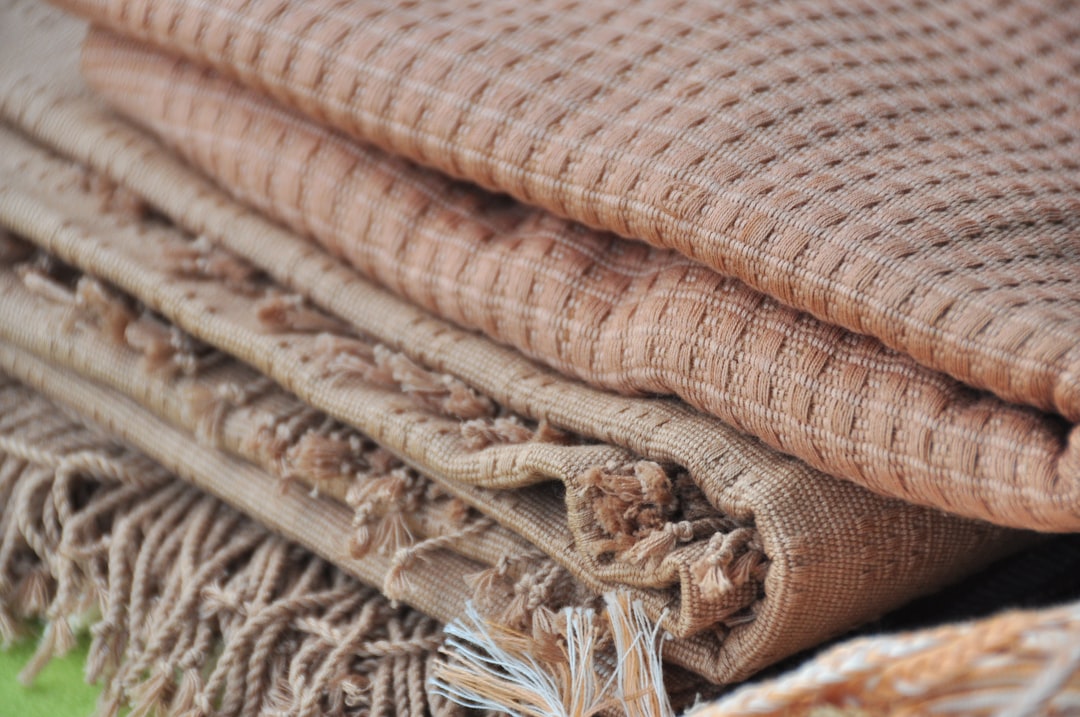
Singapore’s humidity turns natural fibres into science experiments—jute rugs develop a fuzzy green patina within months, while untreated cotton edges curl like old receipts. Polypropylene holds up best, resisting moisture without that plasticky sheen of cheaper synthetics. Look for tight, low-pile weaves (under 8mm) that won’t trap dampness; Megafurniture’s outdoor rugs work surprisingly well indoors, with UV-resistant colours that don’t fade when placed near balcony doors.
Wool’s a gamble—it breathes better than synthetics, but requires quarterly anti-mould sprays and never quite dries properly during monsoon season. Those living near coastal areas like East Coast or Pasir Ris should avoid it entirely; salt air accelerates breakdown. For high-traffic zones in landed properties, try rubber-backed nylon—it wipes clean of paw prints and doesn’t harbour dust mites.
Patterns disguise inevitable stains, but skip dark colours—they highlight mineral deposits from aircon drips. Mid-tone blues and greys hide water marks best, while busy tribal prints camouflage toddler spills. Go 30cm wider than your sofa on all sides; a 200×300cm rug anchors most HDB living rooms without overwhelming the space.
The real test comes during February’s endless drizzle, when even tile floors sweat. That’s when you’ll notice which rugs develop a musty smell—and which ones were worth the extra $200 for proper treatment.
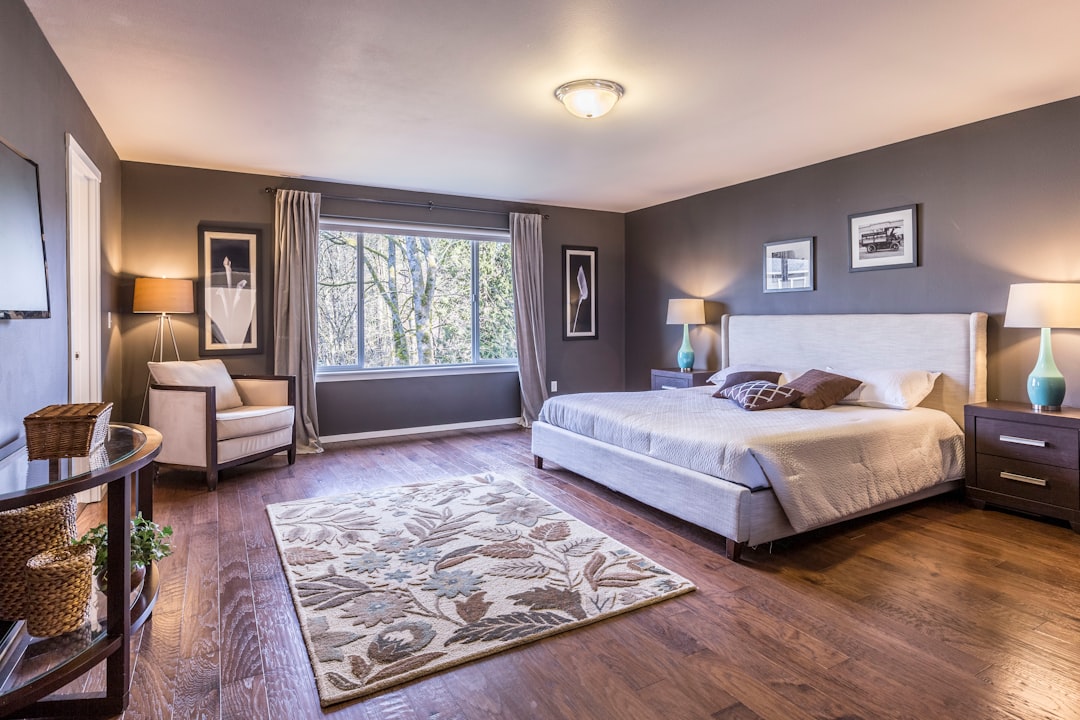
In a 14 sqm condo bedroom, rug size often gets overlooked. A queen bed measures 152×190cm, yet many buyers opt for rugs that barely extend beyond the bed frame. This leaves wood flooring exposed, creating a disjointed look. Ideally, the rug should extend at least 60cm on all sides — enough to frame the bed while maintaining visual balance. Too small, and the room feels incomplete; too large, and the space loses definition.
Patterned rugs can overwhelm compact bedrooms if the design is too busy. In many HDB flats, a dense geometric or floral pattern competes with existing decor, making the room feel cluttered. Instead, opt for subtle patterns with larger motifs — they add interest without dominating the space. A well-chosen rug anchors the room visually, while a mismatched pattern distracts from the overall design.
Material matters in Singapore’s humid climate. Wool rugs, while durable, can trap moisture and develop mould in poorly ventilated bedrooms. Polypropylene blends offer a practical alternative — they’re lightweight, easy to clean, and resistant to humidity. For families with young children, stain-resistant materials like jute or synthetic fibres work best, balancing aesthetics with functionality.
Rug colouring often clashes with bedroom palettes. In many condos, buyers choose rugs that match the bed frame instead of complementing the walls or flooring. A better approach is to pick hues that echo the room’s secondary colours — a muted teal rug, for instance, can tie together curtains and accent pillows. Avoid overly bright shades; they tend to shrink the visual space in compact bedrooms.
Improper rug placement is a common oversight. Many homeowners position the rug too close to the wardrobe or dressing table, leaving awkward gaps. In a 14 sqm bedroom, the rug should centre around the bed, extending evenly on all sides. This creates a cohesive seating zone while maintaining clear pathways — essential in space-constrained layouts.
A toddler’s grape juice spill on a solid-coloured rug leaves a mark that’s impossible to ignore—but on a patterned rug, it practically disappears. For families with young kids, patterned rugs aren’t just decorative; they’re practical. Busy designs camouflage the inevitable messes, from crayon scribbles to cereal crumbs, while the right material ensures durability. Polypropylene blends, for instance, handle spills and stains better than wool or cotton—wipe them down, and they’ll look good as new.
Mid-sized rugs, around 160×230cm, strike the right balance for most living rooms. They’re large enough to define a play zone or anchor a seating area but not so oversized that they overwhelm the space. In a typical 4-room HDB living room, this size leaves enough exposed flooring for easy cleaning while still softening the hard surfaces underfoot. Parents often underestimate how much kids gravitate toward rugs—they’re the default spot for building block towers or sprawled-out storytime.
Colour choice matters, too. Opt for patterns with darker hues or earthy tones—they’re forgiving of dirt and stains, unlike lighter shades that show every smudge. Geometric designs or abstract motifs tend to age better than overly whimsical prints, which kids might outgrow. And while a rug’s primary job is to cushion little knees and elbows, it’s also an opportunity to inject personality into the room without sacrificing practicality.
For families, a patterned rug isn’t just a decor piece—it’s a daily workhorse. It’s the soft landing pad for crawling babies, the backdrop for toy-filled afternoons, and, occasionally, the accidental canvas for spilled milk. Choosing one that’s both stylish and resilient means fewer headaches and more time spent enjoying the chaos of family life.
The Joo Seng showroom’s room-like setups let you see patterned rugs in context — a rare chance to judge scale before committing. HDB buyers often underestimate how lighting affects pattern clarity; here, you can test how a geometric design holds up in low-light conditions typical of a 4-room BTO living room. It’s not just about aesthetics — a rug that fades into the background after sundown defeats its purpose as a visual anchor. Materials behave differently under Singapore’s harsh daylight and warm LED bulbs. Wool rugs, for instance, absorb light differently than polypropylene blends — something you’ll notice when viewing them side by side in the showroom’s varied setups. Families with young kids might lean toward synthetic options for easy cleaning, but it’s worth seeing how they look underfoot before deciding. Patterned rugs often clash with existing furniture or overwhelm compact spaces. The showroom’s setups mimic real living rooms, letting you gauge whether a 240×340cm tribal design dominates a 12 sqm space or if a 150×230cm minimalist print gets lost. It’s a practical way to avoid buyer’s remorse — especially when investing in a high-impact piece. For those refreshing a living room, the showroom’s lighting setups reveal subtleties hard to spot online. A vintage-inspired rug might look muted in photos but come alive under warm lighting; conversely, a bold geometric pattern could overpower a small room when viewed in person. Budget-conscious shoppers often overlook texture, but it’s key to how a rug feels underfoot. The showroom lets you walk on samples — a small detail that makes all the difference when choosing between a plush wool rug and a flat-weave jute option. It’s these tactile moments that help narrow down choices without relying on guesswork. Megafurniture’s
collectionincludes options for every taste, from minimalist solid colours to intricate tribal designs. Viewing them in person ensures you’re not just buying a rug — you’re investing in a piece that fits your home’s unique lighting and layout.

Singapore’s narrow staircases and tight lift lobbies mean rollable rugs aren’t just convenient—they’re essential. Most landed homes and older HDB blocks have turns too sharp for bulky, flat-pack deliveries; even condo lifts often max out at 2.1m, leaving buyers with limited options. Rollable designs, typically shipped in a tube or box, solve this neatly—though it’s worth checking dimensions beforehand, as some 240×340cm rugs still require a bit of manoeuvring.
Humidity is the silent killer of rugs here, especially in landed homes or ground-floor units. Wool and cotton are prone to mould in Singapore’s climate, while polypropylene and synthetic blends fare better but can fade under prolonged sun exposure. Many brands offer warranties against these issues—typically ranging from one to three years—but terms vary widely. Some cover mould and fading outright; others exclude them unless the buyer uses a dehumidifier or UV-blocking curtains.
Delivery timelines can stretch during peak seasons, particularly for custom orders or imported pieces. Standard lead times hover around two to four weeks, though express options might shave off a few days. Buyers should factor in installation too—some rugs arrive with fold marks that need a few days to settle, while others require professional steaming to lay flat.
For families with young children or pets, stain resistance often tops the priority list. Crypton-treated rugs are a solid choice here, blending durability with easy cleaning—though they’re pricier, starting around $1,200 for a 200×300cm piece. It’s worth noting that warranties rarely cover spills or pet damage, so opting for a darker pattern or textured weave can save headaches down the line.
Select a rug that accommodates the dining table and chairs, even when pulled out. Allow at least 24 inches of rug space beyond the table edges for comfortable seating. This ensures chairs remain on the rug during use.
Choose a rug that extends beyond the furniture grouping in the living room. Ensure at least the front legs of sofas and chairs rest on the rug for cohesion. A larger rug helps anchor the space and enhances visual balance.
Opt for a rug that extends 18-24 inches beyond the sides and foot of the bed. A larger rug creates a soft landing area and ties the room together. For twin beds, consider runners on either side for practicality.
Pick a rug that fits under the desk and extends slightly beyond the chair’s movement area. This adds warmth and defines the workspace. A smaller rug can also complement seating areas within the office.
Choose a rug that fits the entryway's shape and leaves a border of flooring visible. Ensure it’s large enough to accommodate foot traffic and door swings. A durable, easy-to-clean rug is ideal for high-traffic areas.
In a 10 sqm study, buyers often wonder if a rug will overwhelm the space. A 120×180cm option strikes the right balance—large enough to anchor the room but not so big it swallows the floor.
Can the rug border touch furniture? Yes, but leave about 15cm between the edge and the sofa or desk. This gap creates visual breathing room, especially in HDB layouts where every centimetre counts.
Patterned rugs in compact homes work best when the design isn’t too busy—smaller motifs or subtle geometrics prevent the space from feeling cluttered. For a 12 sqm master bedroom, a 160×230cm rug can frame the bed without crowding the walking paths.
In many homes, buyers underestimate how much a rug can soften the acoustics of tiled floors. A wool blend rug, for instance, absorbs sound better than synthetic options—handy in open-plan layouts where noise travels.
For families with young kids, durability matters. Polypropylene rugs are stain-resistant and easy to clean, though they don’t feel as plush underfoot. It’s a trade-off worth considering when spills are inevitable.
In a 4-room BTO living room, a rug that’s too small floats like an island, leaving the sofa legs half-on, half-off — a common misstep that disrupts cohesion. Measure the floor space first, leaving 30cm to 50cm of bare flooring around the edges; this frames the rug while keeping it proportional. For a sectional sofa and coffee table setup, opt for a rug that extends at least 15cm beyond the sofa legs — typically a 240×340cm size works best in Singapore’s compact layouts.
Traffic patterns matter, especially in homes with young children or pets. A rug that’s too large can bunch up near doorways or dining areas; too small, and it won’t cushion high-traffic zones like the path between the sofa and TV console. In landed homes with open-plan living rooms, consider two smaller rugs to define separate seating areas — a 200×300cm rug for the main lounge and a 160×230cm piece for a reading nook.
Patterned rugs add visual interest, but the scale of the design should match the room’s proportions. Bold geometrics work well in larger spaces, while smaller, intricate patterns suit HDB living rooms. Keep in mind that darker tones hide stains better, a practical choice for families. Finally, test the rug’s placement with painter’s tape — it’s a quick, mess-free way to visualise the fit before committing.