Waking up with a shoulder that’s numb or throbbing isn’t just a bad start to the day—it’s a direct message from your mattress. That sharp ache, especially around the joint, often means the surface you’re sleeping on is too firm to do its job for a side sleeper. Your hips and shoulders need to sink in a little, not fight against a rigid board. If the comfort layer can’t contour, your spine ends up bending to accommodate the pressure points, not staying in its natural line from neck to lower back.
Think about it: when you lie on your side, your body’s weight concentrates on those two bony areas. A mattress that’s too hard doesn’t yield. It pushes back, forcing your shoulder up and your hip out of alignment. Over hours, that misalignment creates tension all along your spine. You might find yourself rolling onto your back in the night just to escape the discomfort, which isn’t a solution if you’re a natural side sleeper or, say, a pregnant woman advised to sleep on the left.
The fix isn’t about finding the softest mattress available. It’s about that specific medium-soft to medium firmness range, paired with a thicker top layer that can cradle without collapsing. Materials like memory foam or latex are key here—they provide that gradual sink, redistributing pressure so your skeleton stays straight. A good test in a showroom is to lie down in your usual sleeping position and wait. Feel for that gentle hug around your shoulder and hip, not a flat, resistant push.
There’s one exception: if you’re a combination sleeper who spends equal time on your back, you might need a slightly firmer base to support that position too. But for the dedicated side sleeper, that morning pain is a clear sign. Ignoring it means you’re buying a mattress for a different body than yours. Get one that listens.
A mattress for side sleepers needs softer comfort layers to cushion shoulders and hips. Foam density in these layers determines how long the mattress contours without sagging—higher density foam lasts longer in Singapore’s humid climate. Look for mattresses with thicker memory foam or latex top layers, as these materials provide the pressure relief side sleepers require for spinal alignment.
If you’re waking up with a lower back ache in your 3-room BTO, that soreness often starts at the hips. Side sleepers carry the heaviest pressure there—a mattress that’s too firm won’t yield, and your body will instinctively curl into a fetal position to find some relief. That curve misaligns the spine all night, and by morning, the strain has travelled down to the lumbar region. It’s a common complaint in smaller master bedrooms where every inch matters, and a bed that doesn’t contour becomes a nightly source of tension.
The fix isn’t simply a softer mattress overall. You need a specific kind of softness: a comfort layer thick enough to cradle the hip, but with enough support underneath to keep your spine level. That’s where medium-soft to medium firmness comes in, paired with a deeper contouring layer of memory foam or latex. These materials allow the hip to sink just enough, while preventing the rest of your body from sagging into a hammock shape. Without that balance, you’re just trading hip pressure for a curved backbone.
One counterintuitive point: a mattress that feels perfectly supportive during a quick showroom lie-down might still fail you at night. Pressure builds over hours, not minutes. In a typical Queen bed setup, the hip area bears weight continuously, and a surface that feels ‘just firm enough’ during a daytime test can become punishing by 3 a.m. That’s why judging a mattress solely by its initial feel is risky; you need to consider how it performs under sustained, localised load.
I’d recommend prioritising mattresses with a pronounced comfort layer for side sleeping, especially for pregnant women advised to sleep on the left. The only scenario where I’d suggest a firmer option is if you’re a combination sleeper who spends equal time on your back—then you might need a slightly firmer base to prevent back-sleeping sag. But for dedicated side sleepers, that hip relief is non-negotiable. Ignore it, and you’ll likely find yourself shifting uncomfortably, trying to escape the pressure points that a hard surface creates.
The shoulder is the first domino in this chain. When you lie on your side, that bony joint presses down into the mattress surface. If the surface is too firm, it won't yield enough, and your shoulder gets pushed upward, tilting your whole torso. This creates a slight but persistent slope from your shoulder to your hip. That's the start of the misalignment, and it's a common complaint for side sleepers in Singapore's older flats, where mattresses often get kept for decades until they're far too hard. You'll feel it as a sharp ache in the shoulder blade region after a few hours, and that's your cue that the foundation of your spine's posture is already compromised.
Once the shoulder is propped up, your entire upper body leans away from the mattress. This isn't a dramatic lean, but a subtle, sustained cant that your muscles try to correct all night. Your rib cage and lower back are now working against gravity instead of resting flat. In a humid climate, where muscles can tense up more easily, this tilt adds a layer of strain that accumulates over weeks. It's a mechanical stress that many people don't even recognise—they just wake up feeling stiff and assume it's the weather or their age. Correcting it requires the mattress to accept the shoulder's shape, not fight it.
The tilted torso forces the pelvis to rotate forward to find a new balance. Your hips, which should be level, now jut out slightly, seeking contact with the bed. This forward rotation puts the lumbar spine—the lower back—into an unnatural curve. For pregnant women advised to sleep on the left side, this shift is especially problematic, as it adds extra pressure on an already stressed area. The pelvis isn't just sinking; it's actively repositioning to compensate for the shoulder's refusal to settle. That's why hip pain in side sleepers is rarely just about the hip—it's about the entire line from shoulder to hip being out of whack.
With the pelvis forward, the lumbar vertebrae are no longer in their neutral, relaxed stack. They're under constant, low-grade tension, like a rope being pulled from one end. Over months, this can lead to that familiar dull ache in the lower back that feels deep and structural, not muscular. In a medium-firm mattress that's just right, the lumbar region gets supported without being forced upwards. But in a too-soft mattress, the pelvis sinks too deep and the spine sags; in a too-hard one, the pelvis is pushed forward and the spine arches. The goal is to let the lumbar area rest in a gentle, natural dip, not a valley or a bridge.
Breaking the cascade requires a specific feel: medium-soft to medium firmness. This range allows the shoulder to sink just enough to level the torso, while still providing a firm enough base to prevent the hips from plunging too far. It's a balancing act that dedicated side-sleeper models are engineered for, often with thicker memory foam or latex comfort layers that contour without collapsing. For the typical Singapore side sleeper in a Queen bed, this profile is the single most critical spec to look for. Anything outside this range, whether too plush or too rigid, will perpetuate the domino effect from shoulder to hip, and you'll feel it every morning. That's the one real exception: if you're a very lightweight sleeper, you might need to lean slightly softer within that range, but the principle of the cascade still holds true.
You sink into a mattress that feels like a cloud, but your spine feels like it’s curving after a week. That’s the classic Singapore side sleeper’s dilemma. The plush top layer cradles your shoulder and hip beautifully, but without a dense, resilient base underneath, you’ll end up with a body-shaped dip that throws your alignment off. It’s not about softness versus hardness—it’s about combining them in one structure.
Think of it like a well-made sofa. The cushions are soft for comfort, but the frame underneath is rigid and solid. For a side sleeper, the comfort layer needs to be thick enough to let your heavier shoulder and hip sink in slightly, relieving pressure points. Memory foam or latex does this job well. But that layer must sit atop a high-density core that doesn’t compress much under your lighter waist and ribcage. This keeps your spine roughly level, preventing that banana curve that causes morning aches.
The real test isn’t in the showroom lie-down. It’s after six months of humid nights and constant use. A mattress that feels perfectly balanced today can still sag if the base foam isn’t dense enough. That supportive core is what fights compression over time, especially in our climate where materials can behave differently. You want a comfort layer that’s forgiving, but a foundation that’s stubborn.

I’d lean towards prioritising that supportive base, then selecting the softness of the top. A firm, high-density core with a medium-soft comfort layer will serve most side sleepers better than a medium-firm core with an ultra-plush top that eventually collapses into it. The exception is for those with particularly broad shoulders or pronounced hip bones—they might need that extra-thick soft layer, but even then, the base density cannot be compromised. Otherwise, you’re just buying a temporary comfort that turns into a permanent problem.
Singapore’s humidity, hovering around 80% most of the year, does more than just make you sweat. It quietly reshapes the materials in your home. For a mattress, that relentless moisture can turn a promising soft comfort layer into a disappointing mush within a season. Low-density foam, the kind that feels plush at first, is particularly vulnerable—it absorbs moisture from the air and loses its structural integrity, softening until it offers no real support. Your shoulders and hips sink right through, leaving your spine misaligned and pressure relief gone. That’s a real problem for side sleepers, who rely on that cushioning to cradle their joints.
So you need a comfort layer that can stand up to the climate. Thickness and density are the key numbers here. A thicker layer—over three inches—provides enough material to contour properly without collapsing under your weight. Higher density foam resists that ambient moisture, maintaining its shape and support through the monsoon seasons and the dry spells. It won’t feel drastically different on day one, but six months later, when a cheaper option has already flattened, this one will still be doing its job. Think of it as investing in a material that won’t surrender to the environment.
This becomes especially crucial in rooms that face west, where afternoon sun heats the space and can accelerate material changes. Even without direct sunlight, the general dampness is enough. A mattress with a substantial, dense comfort layer ensures your pressure points are consistently relieved year-round. You won’t wake up with that familiar shoulder ache because the mattress has softened unevenly. The support stays where you need it.
The exception? If you’re strictly a back or stomach sleeper, pressure relief isn’t your primary concern, and you might prioritise a firmer base. But for the majority of us who sleep on our side, including those advised to do so during pregnancy, that humid-proof cushioning is non-negotiable. Don’t just check the firmness rating; ask for the density spec and measure the comfort layer’s thickness. Anything less is a gamble on Singapore’s weather—and that’s a bet you’ll likely lose.
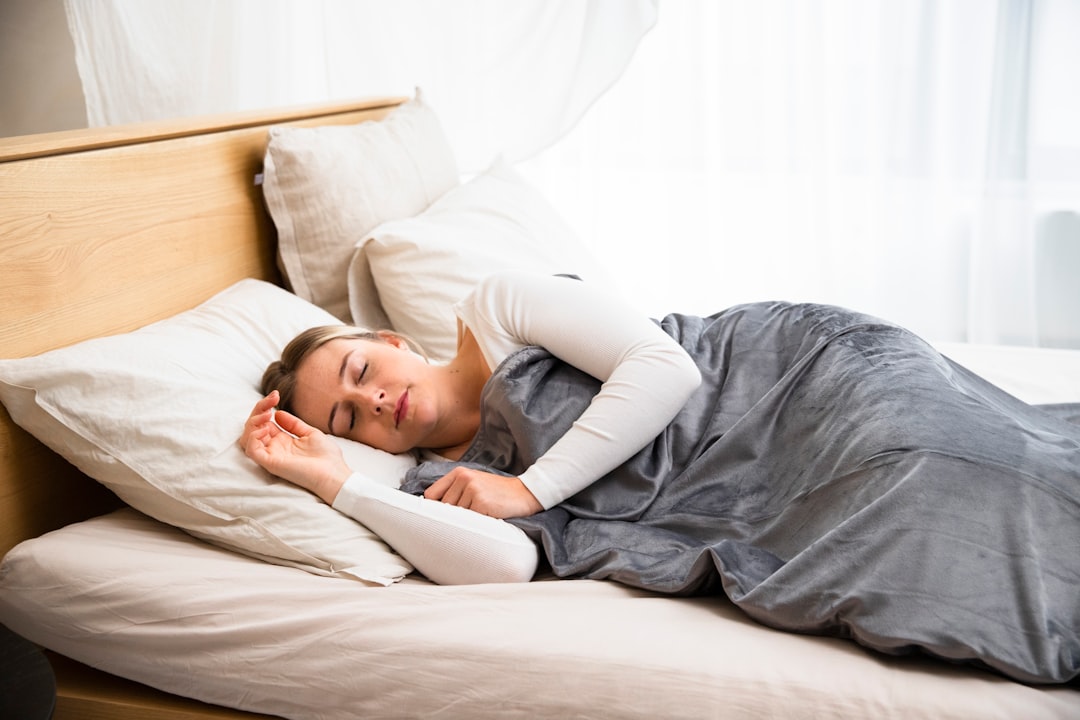
The showroom’s a necessary step, but it’s easy to rush it. You’ll walk in, glance at a few beds, maybe bounce on them for a minute. That’s not enough for a side sleeper. You need to commit to the full fifteen-minute test, lying down in your actual sleeping position, not just sitting on the edge. It’s a peculiar thing to do in a public space, but it’s the only way to feel what your shoulder and hip will experience night after night.
The key is that sinking sensation. Your shoulder should press into the comfort layers, creating a gentle cradle so your spine stays straight. If your hip hits the base support layer too soon, that’s a sign the mattress is too firm for you—it’ll leave pressure points that can wake you up aching. Conversely, if your shoulder sinks so deeply your whole torso tilts, the alignment’s gone. It’s a delicate balance, and you won’t feel it unless you’re properly settled in.
So find a quiet corner, set your phone timer, and lie down. Don’t just flop onto your back; turn onto your side, tuck a hand under your head if that’s your habit, and relax. Pay attention to the weight distribution across your body. You’ll notice the difference between a surface that merely feels soft and one that provides structured relief. That fifteen minutes reveals more than any sales tag or online review.
The exception is if you’re shopping for a guest room bed that’ll rarely be used—then you can probably skip the extended test. But for your own bed, where you’ll spend thousands of hours, the time investment is trivial. It’s the most direct way to judge whether a mattress’s promised ‘medium-soft’ feel actually matches your body’s needs. Without it, you’re just guessing.
You’ll find the real questions about mattresses for side sleepers tucked away in online forums and search logs, not in the showroom brochures. People ask about shoulder pain, pregnancy, and whether a king bed will fit—they’re worried about the practical things that actually affect their sleep in a 4-room flat.
Is medium soft okay for my back if I’m a side sleeper? Usually, yes. The softer surface lets your shoulder and hip sink in, which keeps your spine in a straighter line. But if you sometimes roll onto your back, a pure medium soft might leave your midsection unsupported. A hybrid with a firmer base layer can give you that contouring for side sleeping and still hold your back up when you switch positions.
Memory foam too hot for Singapore? It can be, especially during the humid months. Traditional memory foam traps body heat. Look for versions labelled with cooling gel or open-cell technology—they’re designed to breathe better in our climate. Latex is another option that naturally sleeps cooler and still offers the pressure relief side sleepers need.
Best mattress for a pregnant side sleeper, especially on the left side? This one’s important. The left-side sleeping advice is about circulation, not just comfort. You need a mattress that cushions the growing hip and shoulder without making you feel stuck. A medium-firm mattress with a soft top layer works well—it supports the extra weight while cradling those pressure points. Avoid anything too plush that could make shifting positions difficult.
HDB room size for a king mattress side sleeper? Got to measure carefully. A standard king is around 182cm wide. In a newer BTO master bedroom, roughly 3.5 by 3 metres, it’ll fit if you’re willing to lose some floor space. But in a smaller common bedroom or an older resale flat, a queen might be the smarter choice. You need that 60cm clearance on at least one side to get out comfortably, otherwise you’ll feel boxed in every morning.
A mattress that fits your body and your flat isn't a happy accident—it's a set of numbers you carry into the showroom. Your hip and shoulder width, for instance, are the raw data for pressure relief. If you’re a broader frame, a thicker comfort layer is non-negotiable; a narrower one might find a medium-soft mattress too enveloping. Know your dominant side too, as that shoulder bears the nightly load. This isn’t about preference, it’s about geometry aligning with foam.
Then there’s the geometry of your Eunos flat. The most heartbreaking delivery day surprise isn’t a colour mismatch—it’s a mattress that won’t fit through the lift door. That opening is typically around 90cm wide, and while a flexible mattress can bend, a rigid foundation or a king-sized bed in a box might not turn the corner. Measure your bedroom doorway as well, especially in older HDB blocks where internal doors can be tighter. Leave a buffer of a few centimetres for skirting; a Queen measuring 152 by 190cm might just slide through, but a super-king won’t. The only time I’d say skip this step is if you’re buying a mattress alone, without a bulky base, and your delivery team confirms they’ve handled your block before.
Your budget is the final number to lock down. For a quality side-sleeper mattress with the necessary thicker contouring layers, you’re typically looking at a range that allows for proper materials. It’s a purchase you’ll use every night for years, so allocating for durability and support makes sense. The exception? If you’re in a temporary living situation or know you’ll be upgrading your entire sleep set in a short timeframe, then a more basic option could serve as a stopgap. Otherwise, treat that budget as a fixed line.
With those three figures—your body, your doorways, your finances—you walk into a showroom armed. You won’t be swayed by a plush pillow-top that doesn’t address your shoulder, or a beautiful bed that can’t reach your bedroom. You’re negotiating with facts, not just feelings. And that’s how you avoid the sian moment of a perfect mattress stuck in the lift lobby.
" width="100%" height="480">Side sleeper mattress: Measuring hip and shoulder pressure relief