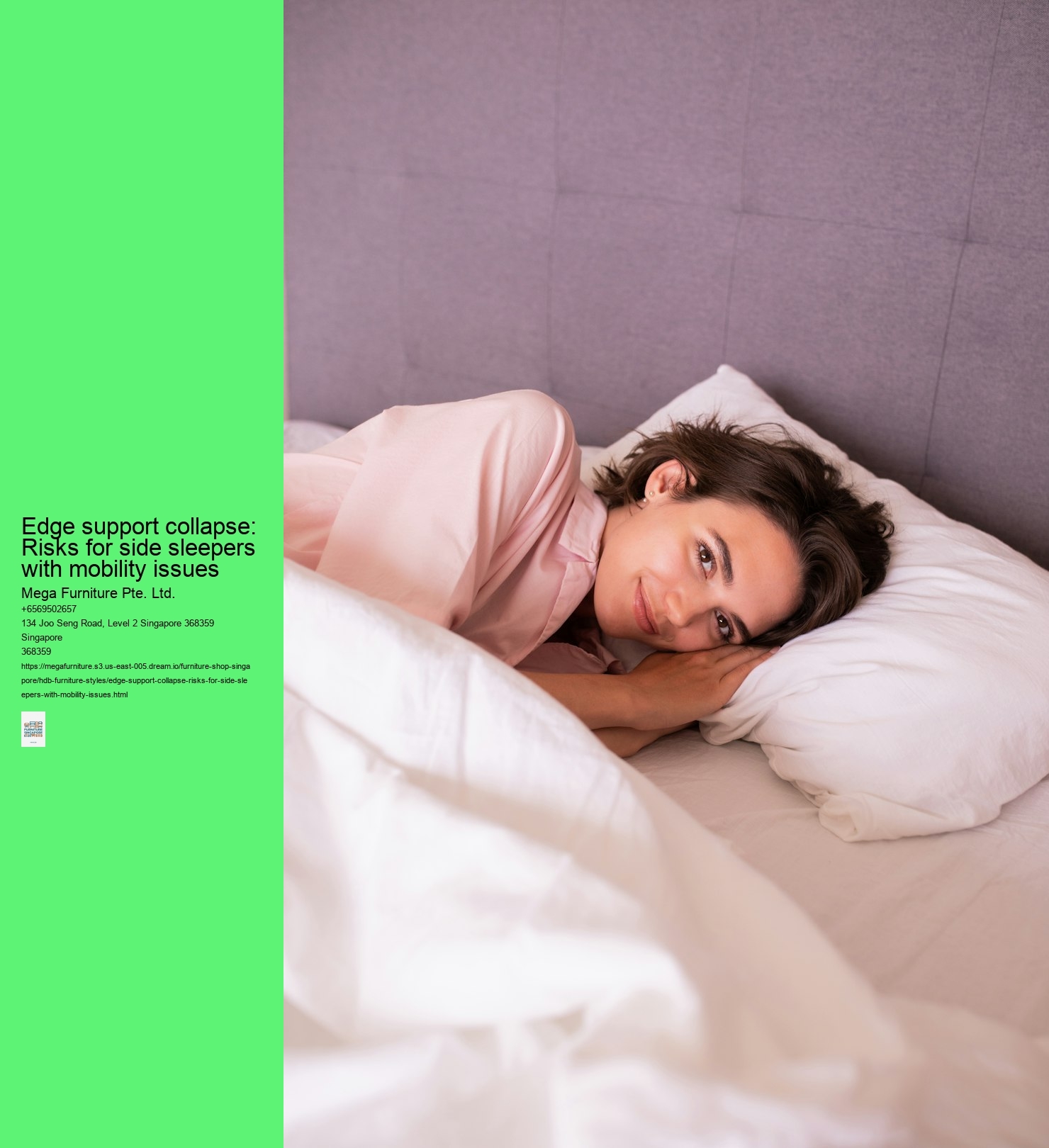
It’s the middle of the night, you’re half-asleep, and you go to push yourself up from the bed’s edge. That’s when you feel it—a sudden, sinking give where there should be solid support. For a side sleeper in a typical HDB common bedroom, that first slip isn’t just annoying. It’s a genuine hazard, especially if you’re dealing with hip pain or you’re in the later stages of pregnancy and advised to sleep on your left side.
Think about the geometry. A standard Queen mattress takes up most of the width in a 12 sqm room. You’re already navigating a narrow channel between the bed and the wardrobe. When the perimeter of the mattress collapses, you lose those crucial few inches of stable platform you need to get in and out safely. Your foot searches for the floor from a slumped edge, and your balance goes. It’s a recipe for a nasty tumble, one that could really set you back if mobility isn’t your strong suit.
This is where the common advice for side sleepers—softer comfort layers for the shoulders and hips—runs into a real-world contradiction. Many of those pressure-relieving foams are terrible at holding their shape at the edges. You sink right off the side. What you actually need is a mattress that’s soft where you lie but firm where you push off. Look for models that build a reinforced border, often with a high-density foam rail or a sturdy coil system around the entire perimeter. That edge shouldn’t compress more than a few centimetres when you sit on it.
I’d only skip this focus on edge support if you’re in a much larger room, maybe a landed property master suite with space to spare on all sides. Then, you can afford a little slump. But for the vast majority of us in flats where every centimetre counts, a strong edge isn’t a luxury—it’s a basic safety feature. Don’t just lie down in the centre during a test. Sit right on the edge and lean into it. Your future self at 3 AM will thank you.
A mattress with weak edges creates a problem you only discover after you’ve bought it. The usable sleeping area shrinks noticeably—what’s sold as a 152 by 190cm Queen effectively becomes a narrower bed, forcing you away from the perimeter. For a side sleeper, this isn't just about losing a few centimetres; it's about being pushed into a compromised position night after night.
Side sleeping requires a delicate balance. Your shoulders and hips need to sink into a softer comfort layer for pressure relief, but your spine must stay in a neutral, straight line. When the edges can't hold you, you instinctively roll toward the unstable centre of the mattress. That's where the support core is often softer, allowing your hips to dip and your spine to curve. You’re left with the worst of both worlds: the pressure points aren't properly cushioned because your alignment is off, and the mattress can't do its one job.
This is especially critical for pregnant women advised to sleep on their left side. That position is already a careful manoeuvre. If the mattress perimeter collapses under your weight, you’re constantly fighting to stay in the safe zone, often waking up sore from the effort. The medium-soft feel you chose for comfort becomes pointless when the structure underneath fails to keep you level.
The only time this consequence might be less severe is if you’re a solo sleeper who never uses the edge, perhaps in a Super Single tucked against a wall. Even then, getting in and out becomes a precarious shuffle. For anyone sharing a bed, weak edges effectively steal space from both partners, compounding the posture issue. You’re paying for a full sleep surface but getting a restricted one, and your body pays the price every morning.
A good side-sleeper mattress needs to cradle your shoulder and hip without pushing back. That's where a soft comfort layer comes in, letting those bony points sink in just enough to take the strain off. Many memory foam models in that mid-range price bracket get this part right, offering a plush, cloud-like initial feel that's very tempting in a showroom. The problem starts when you look beyond that first few inches of foam, because that's where the support has to begin. If the base layers are too soft, your spine will start to sag out of alignment over the course of the night. You'll wake up with that familiar ache in your lower back, even though your shoulder feels fine.
That soft top layer means nothing if the sides of the bed collapse when you sit down to put on your socks. For side sleepers, especially those with mobility concerns or during pregnancy, a firm perimeter is non-negotiable for getting in and out of bed safely. A mattress that's soft all the way through will develop a pronounced hammock effect over time, rolling you toward the centre and making the usable sleep surface much smaller. In a typical HDB master bedroom where every centimetre counts, losing ten centimetres off each side is a serious compromise. You're effectively paying for a Queen but only getting to use a Super Single's worth of space after a year or two.
The core of the issue is how these layers are stacked. The ideal construction is like a firm sandwich with a very soft filling—a robust base foam, topped by a plush memory foam or latex comfort layer, then wrapped in a stable edge-support system. Cheaper constructions often use a single, medium-density foam block throughout, which feels okay at first but lacks the dedicated support a side sleeper's posture demands. That dedicated base layer is what prevents the whole structure from pancaking under your hips over the years. Without it, you're just buying a temporary solution that will need replacing far sooner than a proper mattress should.
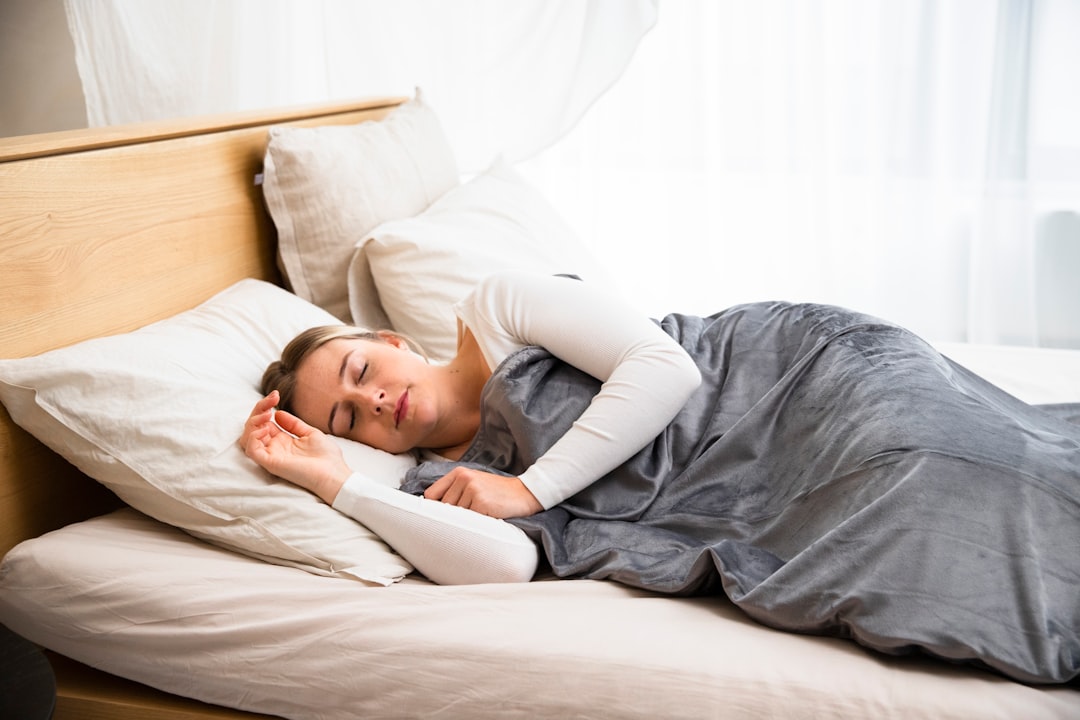
Don't just lie flat in the centre of the display bed for thirty seconds. You need to roll onto your side, settle in for a few minutes, and then deliberately scoot all the way to the edge. Sit right on the corner with your full weight and see if it compresses down to the baseboard. That's the real test for a side-sleeper mattress, because that's where you'll be every morning and night. A mattress that passes this check will have a distinct transition zone—a firmer feel around the perimeter that you can sense even through the soft top layer. If the edge feels as mushy as the middle, walk away, no matter how comfortable the centre feels.
This trade-off is really a question of longevity. A mattress that sacrifices edge support for plushness is borrowing comfort from its future self. The soft materials will break down faster without a firm foundation to hold them up, leading to premature sagging that no amount of rotating can fix. For a side sleeper, this isn't just an inconvenience; it directly impacts spinal health and sleep quality over the five to eight years you expect a mattress to last. Investing in a design that balances both elements means you won't be shopping again in three years, frustrated that your once-comfortable bed now feels like a sinking canoe. That's the real value hidden inside the right construction.
Singapore’s eighty-plus percent humidity doesn’t just frizz your hair—it quietly eats away at the perimeter of your mattress. For side sleepers, that edge breakdown is more than an annoyance; it’s where you perch every morning to pull yourself up, and where the structure gives way first under sustained pressure. Standard polyurethane foam, the kind used in many budget comfort layers and basic edge supports, simply can’t win that long-term fight against moisture and compression. It’ll soften, then collapse, leaving you with a mattress that feels smaller than the frame it’s in.
You’ll want to interrogate the materials list for what’s holding up the sides. Higher-density foam is the first line of defence—it’s more resilient and less prone to that permanent sag. But for true longevity, especially if you rely on the edge for sitting, look for hybrid constructions that incorporate reinforced coils or a dedicated foam encasement around the perimeter. This reinforcement acts like a retaining wall, keeping the softer, pressure-relieving centre foam from spilling over and losing its shape. That’s the spec that separates a mattress that lasts three years from one that lasts a decade in our climate.
Don’t just press down on the centre in the showroom; go to the very edge and sit. A good edge should offer firm resistance, not a slow, bottoming-out sink. If the sales tag only shouts about gel-infused memory foam or cooling covers, ask specifically about the foam density for the edge support and whether there’s a reinforced border. They might not volunteer that detail, but it’s the difference between a mattress that supports your entire sleep surface and one that slowly shrinks inward.

The one time you might compromise? If you’re strictly a budget-first buyer and plan to replace the mattress within a few years anyway. For everyone else—especially side sleepers with mobility considerations or anyone who uses the bed’s edge daily—skimping on this reinforcement is a false economy. You’ll feel the dip long before the rest of the mattress is done.
The specs sheet will list the support layer, the foam density, the coil count. It won’t tell you if the edge caves in when you sit down to put on your socks. For a side sleeper, that outer twenty centimetres is where you plant your hand to get up—and if it collapses under that pressure, you’re not just sinking into the mattress, you’re sinking towards the floor. That’s a mobility hazard, pure and simple.
You need to feel it yourself. At the showroom, don’t just lie politely in the centre. Go to the very edge of that Queen-size Somnuz® and sit down firmly, like you would at 3am. Push your weight onto one hip and hand. Does the perimeter hold you up, or does it buckle and slope away? Online photos can’t translate that sensation of structural integrity—or the lack of it.
Consider the mechanics. Side sleeping already demands a softer top to cushion your shoulder and hip. That often means a plusher comfort layer, which can make a weak edge feel even more precarious. A proper support layer should run right to the border, creating a stable platform. If it doesn’t, you’ll find yourself instinctively avoiding the edge, shrinking your usable sleep surface on a 152 by 190cm bed you paid for. That’s a lousy deal.
So make the trip to Joo Seng or Tampines. Test it like you mean it. The only time you’d skip this step is if you’re buying a mattress purely for a guest room that sees use twice a year—then maybe it doesn’t matter. But for your own bed, where you’ll leverage that edge every single day, confirming its firmness isn’t an extra step. It’s the whole point.
Edge support breakdown: Impact on spinal alignment for side sleepers
The most common complaint about memory foam mattresses in Singapore isn't about the feel, but about the edges going soft. You'll see it in online forums, especially from side sleepers who shift to the edge to get out of bed. That gentle sag you barely notice at first becomes a real problem when your hip dips down every morning, throwing your spine out of whack.
Does all memory foam mattress have weak edges? Not all, but it's a common weakness in cheaper, all-foam designs. Lower-density foam around the perimeter just doesn't hold up. You want a mattress that uses a reinforced border—look for high-density foam encasement or a sturdy coil system wrapped right to the edge. That's what keeps the sleeping surface firm and supportive, even when you're perched on the side.
How to check edge support for side sleeper? Don't just sit on the edge in the showroom. Lie down in your side-sleeping position, right at the very edge of the mattress. Then, mimic getting out of bed—push down with your hand where your hip would be. If the edge collapses more than a few centimetres and you feel yourself rolling off, that's a fail. A good edge will give a little for comfort but won't let you sink.
Mattress edge collapsed after 2 years HDB warranty claim? Warranties usually cover manufacturing defects, not normal wear and tear. If the centre is fine but the edges have softened, brands often call that 'compression' from regular use, especially if you sit on the edge daily. Your claim might not succeed. That's why testing for edge support at the start is so crucial—prevent the problem, don't try to fix it later.
Best mattress for elderly side sleeper with back pain Singapore? For this situation, edge support isn't a nice-to-have; it's a safety feature. An elderly side sleeper needs a softer top for the shoulder and hip, but an absolutely solid perimeter to assist with sitting up and standing. A hybrid mattress with pocketed coils for a firm base and a plush latex or memory foam layer on top often hits the right balance. The coils provide that essential push-back at the sides that pure foam often lacks.
That final nod of approval in the showroom is a quiet moment, but it’s where you lock in years of proper support. Don’t just pat the mattress and leave—this is your last chance to confirm the build matches the promise for your side-sleeping needs. You’re looking for more than just a soft top layer; the real test is at the edges where you’ll perch each morning.
Start with the tape measure. A Queen is 152 by 190 centimetres, but your bed frame’s internal dimensions can vary by a crucial centimetre or two. A slight mismatch might not matter for a back sleeper, but for a side sleeper who shifts to the edge to get up, a mattress that’s even a bit undersized can create an unstable gap. That’s a real hazard for anyone with stiff joints or mobility concerns. Verify the fit precisely against your frame at home, or if you’re buying new, ensure the dimensions are an exact match.
Then, get hands-on with the perimeter. Ask to see a cutaway sample or press firmly along the border. You want to feel a dense, resilient foam reinforcement there—not just a slight thickening of the comfort layer. For side sleepers, this edge support is non-negotiable; it prevents that feeling of rolling off when you’re near the side and provides a firm base to push from when sitting up. Inspect the border stitching, too. It should be tight and even, with no loose threads that could unravel after repeated pressure from sitting on the edge.
Finally, think about the journey home. In a typical 4-room BTO master, the bedroom doorway is your tightest squeeze, often just under 91.5 centimetres wide. A standard Queen mattress is wider than that, so it will need to be bent or flexed to clear the opening. A quality side-sleeper mattress with good foam layers should handle this compression without damage, but it’s a point to confirm with the delivery team. Measure your own doorways and the lift corridor turns; knowing there’s a clear path prevents a stressful, last-minute discovery that leaves you compressing a new mattress in a stairwell.
Skip this checklist, and you’re gambling on assumptions. Do it right, and you’re not just approving a delivery—you’re securing the foundational support that makes a side-sleeping design truly work in your flat.
A mattress warranty reveals what the manufacturer stands behind. Coverage typically addresses core structural defects and significant sagging, not gradual softening from normal use. It’s wise to check the fine print regarding exclusions for comfort layer impressions or damage from Singapore's climate.
Singapore's high humidity demands specific mattress materials. Look for foams with high density and breathable covers to prevent heat retention and moisture buildup. These materials resist sagging and maintain their pressure-relieving contour over years, even in 80%+ humidity.