The typical HDB 3-room common bedroom is a tight eight or nine square metres. A queen mattress, at 152 by 190 centimetres, consumes nearly half of that floor area before you even consider a wardrobe or a side table. For a single side sleeper, that’s a significant trade-off—you gain extra surface you don’t truly need, and lose precious open space you could actually use.
The impulse to upgrade from a single to a queen is understandable. There’s a psychological comfort in having a larger bed, a sense of luxury in the extra sprawl. But functionally, a side sleeper’s primary need is pressure relief at the shoulders and hips, not lateral room. A premium single, 91 by 190 centimetres, provides ample width for that posture, especially if you’re not sharing the bed. The real benefit comes from a mattress with the right medium-soft to medium firmness and thicker contouring layers, not from a wider footprint.
Consider the layout after the bed is in. With a queen, you might squeeze in a narrow wardrobe along one wall, but you’ll likely end up with a single narrow pathway along the other side—maybe just 30 centimetres clearance. That feels cramped daily. A single bed leaves a more generous walkway, perhaps even room for a small desk or a proper storage unit. In a resale flat with an older, smaller bedroom door, manoeuvring a queen mattress frame through a 91.5 centimetre opening can be a struggle; a single frame passes through much more easily.
The one exception is if you frequently host a friend or family member overnight. Then the queen becomes a practical hospitality piece, not just an indulgence. But for the solo sleeper who spends ninety-nine nights a year alone in that room, the queen is a space-hogging luxury. You’re paying for more mattress, and sacrificing more floor, for a benefit you’ll rarely utilise. Go for the better-engineered single mattress instead—your shoulders and hips will thank you, and your room will feel like a room, not just a bed chamber.
You’ll see it in the showroom: a couple lying side-by-side on a queen mattress, each turning onto their side. They’re testing for comfort layers, for pressure relief on the shoulders, but they’re not thinking about elbows. The standard queen width, that 152 centimetres, feels generous when you’re lying flat. But when both partners are active side sleepers, shifting and settling through the night, that space shrinks fast. You’ll find yourself encroaching into the middle, or waking up because a stray elbow has bumped into your partner’s back. It’s a disturbance that chips away at sleep depth over months, not just a one-off annoyance.
The maths is straightforward. Two bodies, each needing space to bend their knees and extend their arms comfortably in that lateral position, simply occupy more real estate than two bodies lying straight. A queen bed leaves about 76 centimetres per person if you divide it evenly, but that’s a static measurement. In reality, you need a buffer zone—a neutral territory where limbs can stray without causing a clash. That buffer is what a king mattress, around 182 centimetres wide, provides. It’s an extra 30 centimetres of peace.
Now, the common hesitation is about room size. In a typical 3.5 by 3 metre HDB master bedroom, a king can absolutely fit with a thoughtful layout—you might just need to accept that the bedside tables become narrower, or that one side of the bed has a tighter clearance. But many newer condo master bedrooms, and even some larger BTO layouts, actually have the footprint to accommodate a king without the room feeling oppressively full. The limiting factor is often the internal bedroom door or the lift access, not the room itself. A flexible mattress can be manoeuvred through a standard 90 centimetre lift door opening, whereas a rigid bed frame might struggle. So the logistics are manageable.

The one real exception is if your room genuinely cannot take the width—say a compact common bedroom in a resale flat that’s under 3 metres wide. In that scenario, the queen is your only viable option, and you’ll have to focus more intently on a mattress with excellent motion isolation to minimise the disturbance from those inevitable little movements. But for the majority of couples where both sleep on their side, especially in spaces designed as master bedrooms, upgrading to a king is a straightforward solution to a problem they often don’t anticipate until they’re living with it every night.
" width="100%" height="480">Mattress size for side sleepers: A guide to minimizing partner disturbanceChoosing a mattress for side sleeping in Singapore often feels like picking between two different victories. You want the pressure relief that lets your shoulder sink in without pain, but you also need that spine to stay in a neutral line—a tricky balance that's not just about softness. Too much sink means your hips drop and your back curves, which is a recipe for morning aches. Too little contour leaves your joints bearing all the weight, and that's equally uncomfortable. The real goal is a surface that cradles the heavy points while keeping everything else properly supported, a specific engineering challenge that many generic mattresses fail to solve.
Memory foam is the classic choice for side sleepers because it contours deeply around the shoulder and hip. That slow, hugging response provides excellent pressure relief, which is why it's so popular for those with joint pain. However, its traditional density can sometimes hold you in a position that doesn't encourage ideal spinal alignment. The newer generations, often with gel infusions or open-cell structures, aim to contour without quite as much persistent sink. In our local humidity, a standard memory foam can feel even slower and warmer, so responsiveness becomes a key factor alongside its supportive qualities.
This is the sweet spot most experts point to, and for good reason. A medium-firm mattress provides a stable base that prevents the midsection from dipping too far, which is crucial for keeping the spine straight. Yet its surface layer, typically a softer comfort section, is designed to yield just enough at the pressure points. It's not a compromise; it's a layered solution. You get the foundational support from the core, and the tailored relief from the top, working together to address both needs. Ignoring firmness and just chasing softness is a common mistake that leads to poor alignment over time.
Motion isolation is a non-negotiable for couples, especially in a smaller space where every shift is felt. Materials like memory foam excel here, absorbing movement rather than transmitting it across the surface. This means one person's midnight turn doesn't become a shared waking event. The trade-off, historically, was that such isolating materials could feel too enveloping and lack the bounce some people prefer. Modern designs often pair a memory foam top layer with a more responsive support core to mitigate that. In a Queen-sized bed in a typical HDB room, limiting disturbance is as important as individual comfort.
Singapore's climate adds a unique variable to this equation. High humidity, often around 80%+, can affect how foam materials feel and perform. Some traditional foams may become slightly less responsive, feeling more sluggish and potentially warmer. This doesn't ruin their support, but it can change the sleeping experience enough to matter. It's why many local options now emphasise breathable designs, cooling gels, or moisture-resistant treatments. Considering how a material behaves in our specific environment is a point buyers often miss, but it directly impacts both the contouring feel and long-term durability of the mattress.
In a 4-room BTO master bedroom, you’ve got maybe 11 square metres to work with. That’s a Queen bed pushed against one wall, maybe a slim wardrobe on the other side, and then you’re done. What gets overlooked is how every movement on that mattress travels directly across the whole surface—there’s no buffer, no distance to dissipate the energy. One partner rolling over feels like a tremor on the other side, and a soft mattress with poor core stability turns that tremor into a full-blown earthquake. You’ll know it’s happening when you wake up feeling like you spent the night on a slightly unstable boat.
That’s why the budget range of $1,500 to $2,400 becomes a critical zone. It’s not just about buying a mattress; it’s about buying a system that isolates motion. For side sleepers, the pressure-relieving comfort layers need to be softer, but the support core underneath has to be rock-solid. A mattress that’s too soft overall will let you sink in, but it’ll also let your partner’s movements ripple right through to you. The goal is a medium-soft top feel married to a very stable base—think thicker latex or high-density foam layers that contour without collapsing. Anything less feels like a compromise you’ll regret every morning.
Some might think a firmer mattress solves everything, but that’s a mistake for side sleepers. A plank-hard surface won’t cushion your shoulders and hips, so you’ll trade motion isolation for joint pain. The real trick is finding a design that separates the comfort job from the stability job. In a compact room, you can’t afford a mattress that does only one of those things well. Your budget should go toward a construction that clearly prioritises both—a distinct, supportive core wrapped in a forgiving comfort layer. That’s the combination that keeps one person’s midnight shift from becoming two people’s sleep debt.
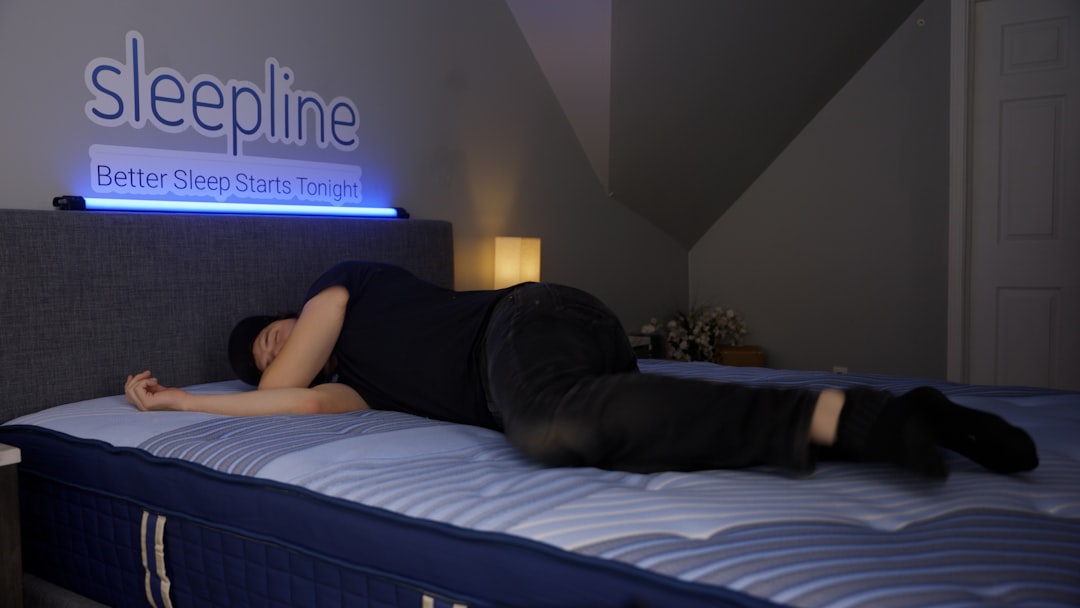
The exception? If you’re a solo sleeper in that master bedroom, then motion transfer isn’t your problem. You can focus purely on pressure relief and let the budget stretch toward pure comfort. But for couples, especially with a pregnancy or existing shoulder pain advising a side-sleeping position, the mattress has to perform a double duty. In a tight space, every design flaw gets amplified. You don’t need a mattress that’s just comfortable; you need one that’s considerate.
For side sleepers, a Queen mattress (152x190cm) typically fits a HDB master bedroom well, leaving enough space for comfortable movement. You need around 60cm clearance on the exit side to get up without disturbing your partner. Consider a Super Single (107x190cm) if the room is particularly compact, ensuring you still have space for bedside furniture.
A mattress review can tell you about durability and delivery, but it can't convey how the foam feels under your shoulder at three in the morning. That's a physical sensation, one you'll experience every night, and it's the single most critical factor for a side sleeper. Online descriptions use terms like "medium-soft" or "pressure-relieving," but those are just labels—your body's interpretation of them is the only truth that matters. The difference between a mattress that cradles your hip properly and one that leaves it aching is often a few millimeters of foam density, something you can't gauge from a star rating.
So you go to a showroom. The real test isn't a quick bounce on the edge; you need to lie down in your actual sleeping position for several minutes. Side sleepers should pay particular attention to shoulder sink and rebound. Does the material allow your shoulder to nestle in without pushing your spine out of line? Does it feel supportive once you settle, or does it keep compressing until you're practically on the base? This isn't a five-second check. Give it a proper three or four minutes, maybe even roll over to your other side. You'll notice if one shoulder feels more pinched than the other, a sign the alignment isn't quite right.
Some shoppers feel awkward doing this in a public space, but that's the whole point of the visit. The showroom is your laboratory. Bring your partner if you share the bed; their weight distribution changes the feel entirely. Try the different models in the same line—often, the core support is similar, but the comfort layer thickness varies, creating that spectrum from medium-soft to medium firmness. You might find the one labelled "plush" actually feels more supportive for your frame than the "medium," simply because your body weight interacts with the layers differently. That's the counterintuitive bit: the advertised firmness isn't universal.
The only time I'd skip the showroom is if you're buying the exact same model you already own and love. Otherwise, your online research should culminate in a physical test, not replace it. Reviews are useful for spotting long-term wear issues or checking if a brand's customer service is responsive. But for the nightly comfort that affects your sleep quality—and by extension, your back and mood—there's no substitute for lying down. You're not just buying a product; you're investing in eight hours of your life every night. Make that decision with your body, not just your browser.
A King mattress in a 12 sqm HDB common bedroom? You can technically squeeze it in—if you’re willing to treat the room as a dedicated bed chamber with no other furniture. That’s the blunt verdict. The dimensions themselves, around 182 by 190cm, will fit within the floor space, but the practical reality is different. You’ll likely end up with zero clearance on one side, maybe just 30cm on the other, and navigating around it becomes a daily shuffle. For a couple who are side sleepers and need that extra width to minimise disturbance, it’s a trade-off: the peace of sleeping apart on a vast surface versus the cramped feeling of living in a space dominated by the bed. In a 3.5 by 3 metre master bedroom, a King feels luxurious; in a smaller room, it starts to feel like a logistical error.
Can a soft mattress cause back pain for side sleepers? It’s a common worry, but the answer isn’t straightforward. A mattress that’s too soft—one where you sink in deeply without any support—can indeed let your spine sag out of alignment, leading to aches. For side sleepers, the key is a medium-soft to medium firmness that cushions the shoulders and hips without letting the middle of your body collapse. That pressure relief is crucial, but it must come with a supportive base layer. So a purely soft, unsupported mattress is a risk; a mattress designed for side sleeping with softer comfort layers over a firm core is the goal.
How long does memory foam last in SG humidity? The lifespan isn’t just about the foam’s density—it’s about the environment. SG humidity, often sitting around 80% or more, doesn’t directly rot the foam, but it can affect the materials around it and the feel. Memory foam is inherently temperature-sensitive, so in a perpetually warm, damp room, it might feel softer and respond differently over time. A good, high-density memory foam core in a well-ventilated room should still last many years, but the comfort layers might compress faster if the mattress isn’t allowed to breathe. Using a breathable mattress protector and ensuring some airflow around the bed helps a lot.
Is latex better than foam for motion isolation? For minimising partner disturbance, latex often wins. It contours to your body like memory foam, providing that essential pressure relief for shoulders and hips, but its bounce and responsiveness mean it transfers less vibration. When your partner shifts or gets up, a latex layer absorbs that movement more effectively, preventing the ripple effect across the surface. Memory foam is excellent at isolating motion too, but it can sometimes feel like you’re sinking into a quicksand that holds movement—latex gives you support without that trapped feeling. The one exception might be if you prefer the deep, slow hug of traditional memory foam; then its motion isolation is still very good, just a different experience.
The tape measure is your last defence against a mattress that can’t even get into the room. A Queen frame might fit the footprint of a typical 3.5 by 3 metre BTO master bedroom, but that’s before you account for the swing of wardrobe doors. You need at least 60 centimetres clearance on the side you exit from, and a realistic 30 centimetres on the other sides—anything less means you’ll be climbing over the bed to get your clothes. King sizes, around 182 centimetres wide, are a real squeeze in rooms under 3 by 2.5 metres; they’ll dominate the space until there’s barely room for a side table. Measure twice, factoring in skirting boards that eat up another centimetre or two, then buy once.
Firmness is a personal calibration, not a rating from a general review. Side sleepers need a surface that cushions the shoulder and hip without letting the spine sag. Medium-soft to medium is the typical sweet spot, but your own shoulder pressure is the final arbiter. A mattress that feels supportive in a showroom might still be too firm after a full night’s weight settles into it. The only exception is if you share the bed with a partner who prefers a much firmer feel; then you’re looking at a split-firmness design or accepting a compromise.
The core material is what fights sagging over years of humid nights. In our climate, where humidity often sits above 80%, a high-density foam or a properly tensioned spring system will hold its shape longer than a low-grade fill. Memory foam and latex comfort layers are excellent for contouring, but they rely on a sturdy base underneath. Check for that—a thick, soft top layer paired with a weak core is a recipe for a mid-life collapse. Don’t just press the surface; ask about the foundation.
Plan your showroom visit for when you’re actually tired, not just browsing. Late afternoon, after a long day, lets you feel the pressure relief properly. Lie down in your side-sleeping position for a solid five minutes, not a quick touch-and-go. Let your shoulder sink in. That’s the moment you’ll know if the medium-soft rating is right for you or if you need to adjust. It’s the one test a measurement can’t replace.