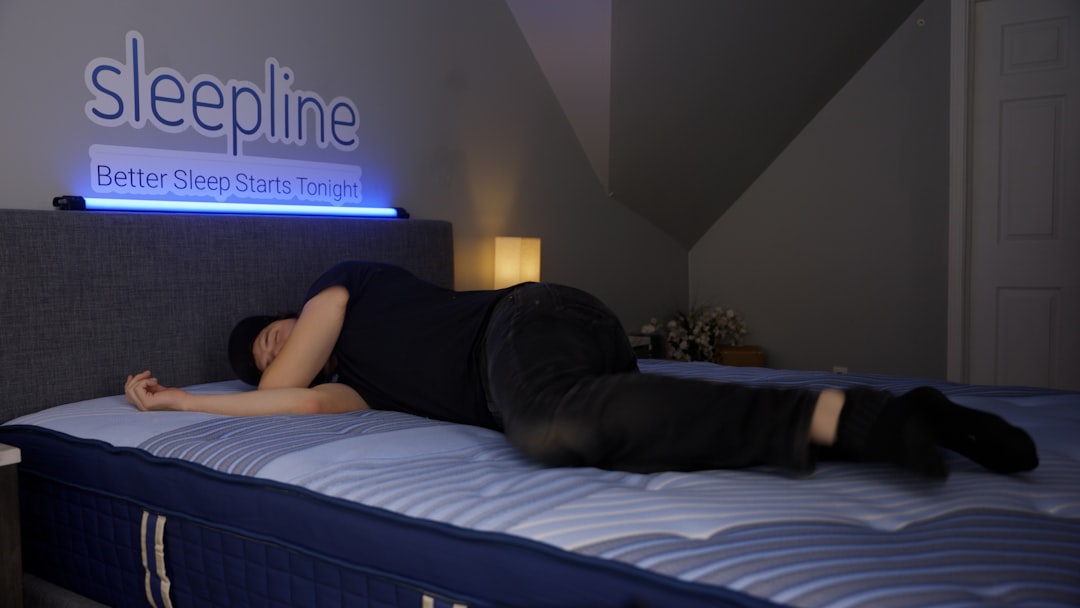
The trouble starts with a dip you can see. Lie on your side and the shoulder pushes down, concentrating your whole weight onto a coin-sized patch of mattress. Over weeks, then months, that spot gets a nightly workout, and if the support core underneath isn’t up to it, the whole structure begins to fail. You won’t feel it day one, but give it a year in our climate and that gentle contour becomes a permanent valley—your spine starts to curve into the hollow, and the morning ache in your neck or lower back tells the story. It’s a slow surrender, one that cheaper cores simply cannot withstand.
For side sleepers, the real test isn’t the initial softness of the comfort layer—that’s for pressure relief. The true battleground is the dense foam or spring unit beneath it, the one that’s supposed to hold the line. Lower density foams, often used to cut costs, are the weak link. They compress permanently under that relentless shoulder and hip pressure, and our humidity speeds up the process, making the material softer and less resilient. The mattress doesn’t just get softer; it develops specific sinkholes that wreck your alignment. Your hips sink too deep, your spine bends, and you wake up with that familiar stiffness.
That’s why the core’s construction matters more than almost anything else for you. A firmer, higher-density foam base, or a well-designed pocketed spring system, provides the necessary resistance to keep your spine level even as the top layers cradle your joints. It’s the difference between a mattress that contours and one that collapses. You want a core that says “this far and no further” to your shoulder, creating a stable platform so the comfort layers can do their job without letting you sag into misalignment.
The only time you might consider a softer core is if you’re exceptionally lightweight—the pressure simply isn’t as punishing. For most adults, though, compromising on core density is a direct ticket to premature sag and disrupted sleep. Look for specs that emphasise high-density support layers, and don’t be shy about pressing down hard on the shoulder zone of any showroom model. If it bottoms out too easily under your palm, imagine what a year of your body weight will do.
Queen-size mattresses, measuring 152x190cm, fit most HDB master bedrooms comfortably, providing ample surface area for side sleeping. Ensure you leave about 60cm clearance on the exit side for easy movement. For compact rooms, a Super Single (107x190cm) might be a better fit, offering sufficient width without dominating the space.
Picture a mattress that feels just right on the showroom floor, offering that perfect cradle for your shoulder and hip. Five years later, in the constant 80% humidity of your HDB bedroom, that same bed might feel like a shallow ditch you can’t climb out of. The culprit is often the hidden spring core, slowly losing its fight against our climate. Those metal coils, designed for bounce and lift, are under a silent, sustained assault from moisture in the air—especially in a room with poor cross-ventilation or one that faces the afternoon sun and stays shut all day.
Metal fatigue isn’t just about weight; it’s about chemical change. Over months and years, the high humidity encourages oxidation, a process that subtly weakens the steel’s inherent elasticity. The coils don’t snap, they just get tired. They lose their tension and their ability to spring back fully after compression. For a side sleeper, this degradation is a particular problem because your support relies on a delicate balance. The comfort layer softens for your pressure points, but the core must still provide a firm enough lift to keep your spine aligned.
What you’ll notice is a slow, deepening sag precisely where your hips sink in. The mattress feels increasingly “hammocked,” pulling your spine out of its neutral line. You might wake with a stiff lower back or find yourself constantly shifting, trying to find a spot where the springs haven’t given up. It’s a gradual letdown, often mistaken for the foam layers wearing out, when the real failure is happening deeper down. A well-ventilated room can slow this process, but in our climate, it’s a battle against physics.

This is why the core’s material and construction matter as much as the top layers for long-term comfort. While a quality, well-sealed spring unit will last, the relentless humidity is the reason some buyers look towards alternative core materials that aren’t susceptible to rust or metal fatigue. The one exception might be a bedroom with superb, year-round air circulation—think a corner unit with windows on two walls that are consistently open. But for most of us in typical flats, that spring core is working in a tough environment from day one.
That first year on a new latex core is pure contouring relief, especially for side sleepers who need pressure to melt away from their shoulders and hips. The material yields just enough to cradle your curves without letting your spine sag out of alignment, a perfect balance that feels custom-moulded. You'll wake up without that familiar ache, convinced you've found a mattress that'll last a decade without complaint. This initial phase is where natural latex truly shines, providing the adaptive support that side sleeping demands. It's a forgiving surface that seems to understand exactly where your body needs to give. That plush, responsive feel is what sells most people on the material in the showroom.
West-facing bedrooms in Singapore get a brutal dose of afternoon sun, and that sustained heat accelerates changes in any natural material. Over months and years, those powerful rays beating through the window can start to bake the resilience right out of a latex core. The effect isn't immediate, but it's cumulative—like how leather left in the sun becomes dry and brittle. For a mattress positioned where the evening sun hits it directly, the ageing process kicks into a higher gear. You won't see it day to day, but the core is slowly cooking, its internal structure subtly altering under the relentless tropical light. This is a key reason why placement matters almost as much as the material you choose.
The medium-firm feel you bought for ideal support doesn't stay that way; it gradually shifts towards medium-hard. This isn't a sudden collapse but a slow, firming transformation where the latex loses some of its elastic spring-back. What once gently cupped your shoulder now offers more resistance, pushing back against your pressure points instead of relieving them. That celebrated contouring slowly diminishes, and the mattress begins to feel more like a uniform platform than a responsive partner. For a side sleeper, this shift can mean waking up with renewed shoulder stiffness or hip pain you thought you'd left behind. The change is so incremental you might blame your own body before you suspect the bed.
As the core firms, the even weight distribution you enjoyed starts to falter. Your heavier points—shoulders and hips—bear more of the load because the material no longer deforms as deeply to accommodate them. This creates localised zones of higher pressure that can interrupt sleep and cause morning soreness. The mattress isn't failing in the traditional sense of sagging; it's failing by becoming too uniformly rigid for your sleeping posture. You might find yourself tossing more, unconsciously searching for a softer spot that simply isn't there anymore. It's a classic sign that the core's lifecycle is advancing, and its supportive character has fundamentally changed.
Natural latex is durable, but its performance lifespan for a side sleeper isn't the same as its structural lifespan. The core might not show visible dips or damage, yet it can stop providing the specific pressure relief you bought it for. This is the crucial trade-off: a material that lasts fifteen years physically might only deliver optimal comfort for half that time if conditions are harsh. Recognising this timeline helps you plan, not as a failure of the product but as a reality of its organic nature. For those in sun-drenched rooms, considering a mattress rotation schedule or even a protective cover from day one isn't overkill—it's practical preservation. You're managing the lifecycle, not just reacting when it's already too late.
The first time you press down on an $800 mattress, you’ll feel it. It’s a simple foam core, decent for a start but not built for the long haul. For a side sleeper, that foam is just soft enough to cradle the shoulder, but it’ll start to give way in a few years—you’ll wake up with that familiar hip ache because the support has gone flat. It’s the entry-level choice, and it shows. You’re buying time, not a solution.
Step up to the $1,500 tier, and the construction gets interesting. Here’s where hybrid systems come in, mixing pocketed coils with foam layers. That’s a game-changer for contouring. The springs give your spine a stable base while the foam above them relieves pressure exactly where a side sleeper needs it—at the shoulder and hip. The whole thing breathes better, too, which is a quiet win in our humidity. This is the sensible middle ground where you stop compromising on support.
Cross the $2,600 mark, and you’re in the realm of serious materials. Think high-density natural latex or advanced, zoned pocketed coil systems. Latex is a different beast—it’s buoyant and contours without that sinking feeling, offering a durable kind of softness that lasts. The premium coil systems are engineered with different zones, firmer under your torso and softer under your shoulders and hips, to keep everything aligned. These materials don’t just feel different on day one; they’re built to hold their shape for a decade or more.
Is the jump to premium always necessary? For most side sleepers dealing with persistent pressure points, that investment in durable contouring pays off every single night. The one time you might pause is if you’re in a transitional phase—say, moving into a BTO in a year and your needs might shift. Otherwise, that mid-tier hybrid is the absolute floor for proper support. Anything less, and you’re just waiting for the aches to start.
The mattress edge is where the engineering shows. A centre can feel fine, but if the perimeter caves when you roll near it, you’ll feel like you’re slipping off the bed every night. Side sleepers especially—pregnant women shifting position, anyone with shoulder pressure—need that border to hold firm. You can’t gauge that from a website picture or a specs sheet; you need to put your weight on it.
That’s the concrete reason to visit a showroom. At Megafurniture’s Tampines location, you can walk right up to a Somnuz mattress and sit squarely on its edge. Lean into it. Feel whether the support core resists or dips. A proper edge should feel like a solid platform, not a sloped decline. This test is quick, but it tells you more about long-term durability than any sales pitch about layers. If the edge collapses under a simple seated test, imagine what nightly rolling will do over five years.
Some buyers skip the showroom because they think firmness is the only variable. They’ll order a medium-soft mattress online, trusting the description. But edge integrity isn’t about firmness—it’s about the reinforcement hidden inside the perimeter. A mattress can be plush on top yet have a weak border. That mismatch is a common culprit for that unsettling roll-off sensation in a 152 by 190cm Queen. Testing in person reveals it instantly.
The only time I’d advise skipping this hands-on check is if you’re replacing a mattress you already know and love, and you’re buying the exact same model again. Otherwise, you’re guessing. For side sleepers, that guess often ends with shoulder ache and a mattress that feels smaller than it is. So make the trip. Sit on the edge. Feel the core hold you. That’s the difference between a mattress that supports and one that just surrounds.
Walk into any showroom and you’ll see it—the buyer who lies flat on their back on a medium-firm mattress, gives a satisfied nod, and commits. It’s a logical test, but one that sets up side sleepers for months of shoulder ache. The problem is that a spine lying flat needs a very different kind of support than a body lying on its side, where the hips and shoulders dig in.
For a back sleeper, that medium-firm feel keeps the spine aligned on a stable plane. But when you roll onto your side, those pressure points need to sink in. A mattress that’s too firm won’t allow it, leaving your shoulder and hip to bear your full weight. You’ll find yourself waking up with a numb arm or a stiff joint, and that’s your body telling you the support is wrong. The fix isn’t a softer mattress overall, but one with a thicker, more forgiving comfort layer on top of a supportive core.
Think about the geometry. A side sleeper’s shoulder needs to contour down into the mattress so the spine can stay straight from neck to tailbone. That’s why the sweet spot is typically medium-soft to medium firmness, with a generous layer of memory foam or latex that cradles those bony prominences. It’s a specific construction, not just a vague feeling of softness. A mattress that feels perfect on your back in a two-minute showroom test will almost certainly punish your shoulders through the night.
The only time this advice doesn’t hold is if you’re a true combination sleeper who spends equal time on your back and side. In that case, you might lean towards the firmer end of medium to find a compromise that works for both positions. But for the majority who naturally favour their side—pregnant women advised to sleep on the left, or anyone waking up with pressure pain—prioritising that shoulder relief is non-negotiable. Don’t let a showroom habit designed for back sleepers dictate a decade of restless nights.
" width="100%" height="480">Mattress core lifespan: Factors affecting support for side sleepersThose search bars see a lot of action. Side sleepers in Singapore aren’t just looking for comfort—they’re hunting for relief from very specific aches and worries, and the questions they type are telling. Let’s get into the real ones.
Best mattress for side sleeper shoulder pain? You need a comfort layer thick enough to let your shoulder sink in without hitting a firm base. A medium-soft latex or a memory foam that’s not too dense will cradle the joint and stop that morning pinch. The support core underneath must stay firm, though—otherwise your hips drop and your spine curves, trading shoulder pain for backache.
How long mattress last Singapore humidity? That’s the right question to ask. Our 80% humidity attacks everything, and a mattress is no exception. Moisture gets into foam layers and can make them degrade faster, losing that crucial cushioning for your hips and shoulders. A good mattress with a breathable cover and quality materials might last you a decent stretch, but in a non-air-conditioned bedroom facing the afternoon sun, expect that lifespan to shrink. Proper ventilation is key, but the climate here is a relentless test.
Mattress for pregnant side sleeper left side? This is about pressure relief for two bodies. A mattress that’s too firm will dig into your hip and shoulder, making it impossible to stay comfortably on your left side. Look for one with a plush, pressure-relieving top layer—memory foam or latex are good bets—that adapts to your changing shape. Just make sure the transition and support layers are strong enough to prevent you from sinking into a hammock, which throws alignment off completely.
Can memory foam mattress cause back pain side sleeper? It can, but only if it’s the wrong one. A cheap, low-density memory foam will feel soft initially but offers no real support—your heavier hips sink right through, bowing your spine. That’s a recipe for ache. The good ones have a firmer, higher-density foam below that contouring layer to keep your spine in a neutral line. So the material isn’t the villain; it’s the poor construction that gets you.
Walking into a showroom, you’ve got to go straight for the side-lying test. Don’t just flop onto the display bed like any other position—mimic exactly how you sleep at home, hips stacked and knees slightly bent. Now, press your palm firmly along the edge of the mattress, maybe about where you’d sit to put on your socks. If the perimeter collapses and rolls you off, that edge won’t support you long-term, especially on a Queen in a 4-room BTO master bedroom where every centimetre counts.
The sink test for your shoulder is non-negotiable. Lie on your side and have someone, maybe the salesperson, slide a hand under the curve of your lower back. If it’s flat as a board, your spine’s out of line and you’ll feel it by morning. A properly designed side-sleeper mattress should cradle that shoulder joint without your shoulder feeling like it’s being punched up into your neck. It’s a tricky balance—too hard, you get pressure points; too soft, you sag. This is where that thicker comfort layer, memory foam or latex, really earns its keep.
Next, ask the blunt questions. Skip the sales talk about cooling covers and jump straight to core density. A high-density foam base is what keeps the whole structure from collapsing after a few years of nightly use in our humid climate. You need a number, not a vague ‘premium quality’ promise. And while you’re at it, check if the core material is open-cell or has any ventilation channels. Our humidity’s a beast—hovering around 80% plus—so a mattress that can’t breathe will trap moisture and feel perpetually damp, no matter how fancy the topper.
Ventilation’s a real silent killer for side sleepers in a BTO master bedroom. That room, especially if it’s got the standard layout with maybe one window, can get stifling. Lie on the display model for a solid ten minutes. Does your back feel clammy or surprisingly cool? A good mattress for our climate shouldn’t feel like you’re sinking into a warm swamp; it should dissipate that body heat. For a couple, this is doubly important—your partner’s warmth plus our ambient stickiness is a recipe for a miserable sleep.
So, you focus on those four checks: edge support, shoulder sink, core density, and breathability. Miss one, and you’re gambling with five years of your sleep quality. The only time you might skip the deep dive on ventilation is if your bedroom is an air-conditioned sanctuary 24/7—but even then, that core density question remains king.