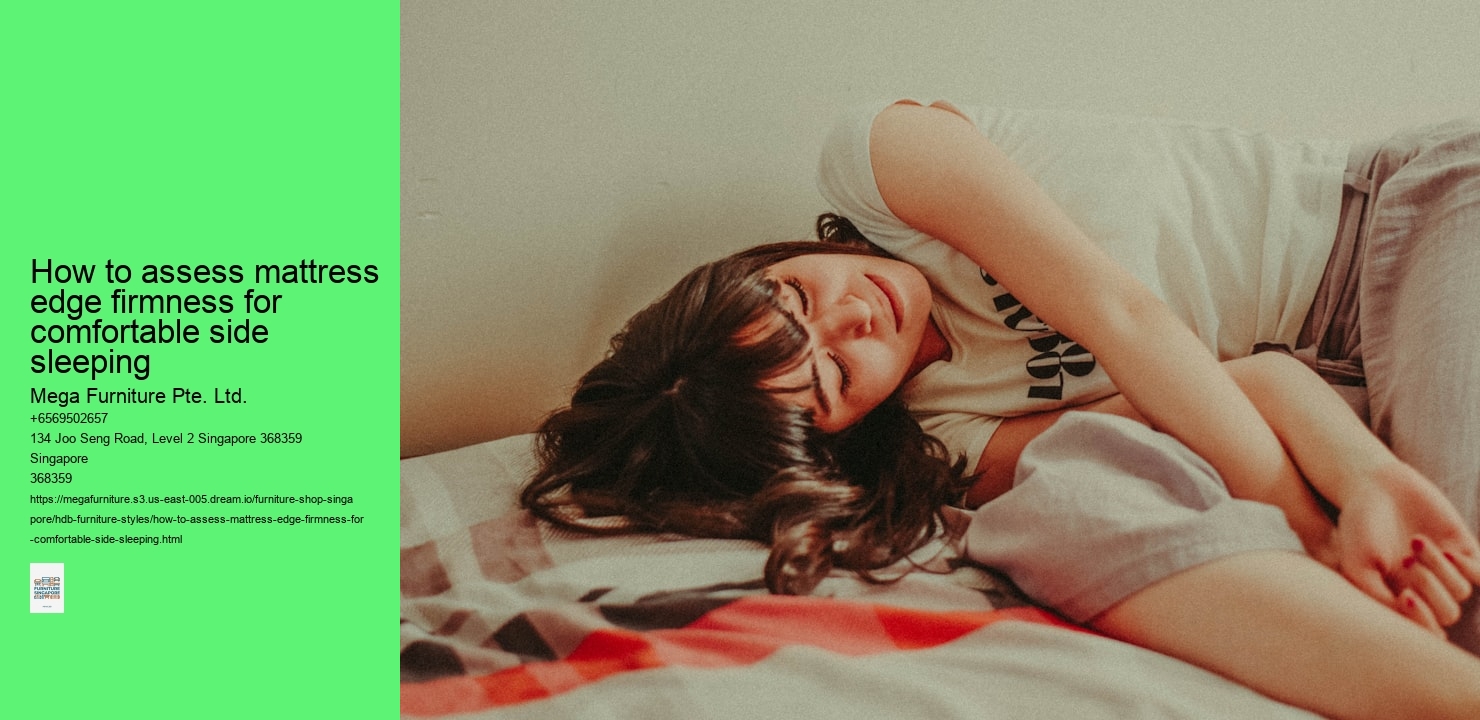
Picture a Queen mattress tucked into a typical 3.5 by 3 metre BTO master bedroom. When you sit on the edge to tie your shoelaces or get up in the morning, that perimeter shouldn’t buckle under you. For a side sleeper, that edge isn’t just a sitting spot—it’s part of your sleeping surface. As you roll onto your side near the border, a weak edge caves in, pulling your hips and shoulders down into a misaligned dip. Your spine curves, pressure builds on those joints, and you wake up with that familiar ache.
In a compact space, you’re likely to use the bed edge more often. There’s no room for a bench, so you perch there to fold laundry or chat. That constant loading tests the mattress border daily. A poorly supported edge will soften over time, creating a permanent sag zone right where you lie. For pregnant women advised to sleep on the left side, or anyone managing shoulder pain, that dip forces the body into an angled, compressed posture that defeats the purpose of a side-sleeping mattress’s softer comfort layers.
The core issue is one of engineering. A mattress designed for side sleeping typically has medium-soft to medium firmness with thicker contouring foam to cradle your curves. memory foam mattress . That’s great for pressure relief centrally, but if the perimeter is just a thin foam wrap over a basic coil grid, it can’t hold up. You need a border that’s built to resist compression, something with a denser foam encasement or reinforced rail. Without it, the mattress feels like a island with crumbling shores—safe in the middle, treacherous at the edges.
There’s a straightforward test. In a showroom, don’t just lie in the centre. Sit firmly on the edge, then lie right along the border. Feel if your hip sinks drastically lower than your shoulder. If it does, that model will fail you in a HDB bedroom. The only time this matters less is if you’re a strict centre sleeper who never uses the edge for sitting or sleeping, but that’s a rare habit. For most, edge firmness isn’t a luxury—it’s a necessity for alignment and comfort.
Extending mattress lifespan: Protecting edge support for side sleepers
You'll see it in a showroom—they push the mattress edge down, it holds firm, they call it 'edge support'. But that's a performance for the centre of the bed. The real test is what happens when you're a side sleeper rolling off the pillow, your shoulder sinking deep into the comfort layers right near the perimeter. That's where the construction details separate the ones that'll last from the ones that'll sag.
Foam encasements are the common fix. They wrap the spring unit with a solid foam border, giving a firmer feel when you sit on the edge. For a side sleeper, though, that firmness can feel abrupt—your hip hits the soft memory foam layer, then meets a sudden wall. Border rods, those steel wires running through the foam, stiffen it further. They're great for preventing roll-off if you sit up, but they don't soften the pressure point where your body meets the edge.
What actually survives nightly pressure is a high-density foam rail. It's a denser, more resilient foam block integrated right into the mattress's side structure. The classic side-sleeper choice is a foam mattress — it conforms to the body's curves, relieving pressure on the hips and shoulders and helping keep the spine aligned. It also isolates motion well, so a restless partner is less disruptive. The one thing to check in the tropics is heat: gel-infused or open-cell foam dissipates body warmth far better than traditional foam. For the contouring, cradled feel side sleepers tend to prefer, memory foam is the first construction to try.. When you lie near the edge, the softer comfort layers compress, but this dense foam provides a gradual, supportive base that prevents you from feeling like you're tipping over a cliff. It's the difference between a defined ledge and a gentle slope.
Pocketed coil edges often feel softer and more conforming, which side sleepers might initially prefer. But over months, those individual coils near the perimeter can compress permanently under the concentrated weight of a hip or shoulder. A denser memory foam layer, built into the edge itself, distributes that pressure more evenly. It won't collapse the same way—it slowly recovers each time you get up.
The one exception? If you're strictly a centre-of-the-bed sleeper, never venturing near the sides, then a simpler encasement might do. But for most, especially in a Queen sharing a 152 by 190cm space with a partner, you'll end up near that edge one night. You want the construction that gives, but doesn't give up.
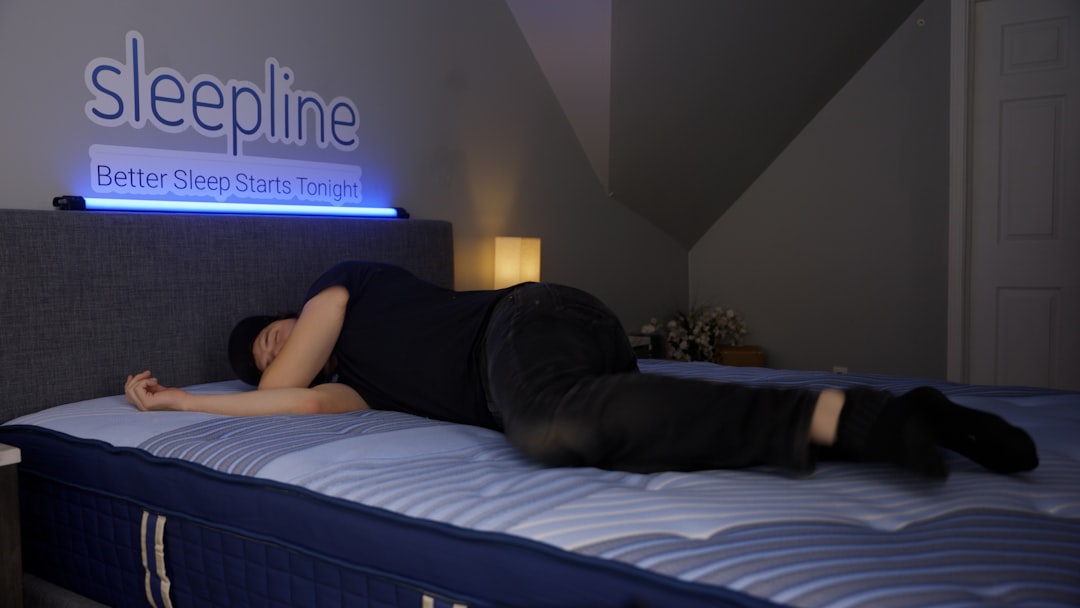
Don't just lie in the centre of the mattress during a showroom visit—that's where every model feels supportive. You need to roll right to the edge, the place where you'll actually sleep night after night, and settle into your side sleeping position. Many mattresses have a firm perimeter frame that creates a noticeable ledge, a literal cliff your hip might roll off in the middle of the night. For side sleepers, that edge needs to provide a gentle transition, not a hard barrier, so your shoulder and hip can sink comfortably without feeling like they're about to slide off. Spend a full two minutes there, letting your body weight fully settle, and pay attention to whether you feel secure or precariously perched.
As you hold your side position at the edge, focus specifically on your shoulder's depth of penetration into the comfort layers. If it sinks too deeply, you'll likely feel a pinch or pressure point against the firmer base below, a sign the mattress is too soft at its perimeter for long-term support. Conversely, if your shoulder barely contours and feels propped up on a firm platform, that edge is likely built for sitting or durability rather than side-sleep comfort. The ideal scenario is a balanced sink that cushions the joint without letting it bottom out, maintaining alignment even when you're right against the border. This test is non-negotiable because a shoulder that aches every morning means you bought the wrong mattress.
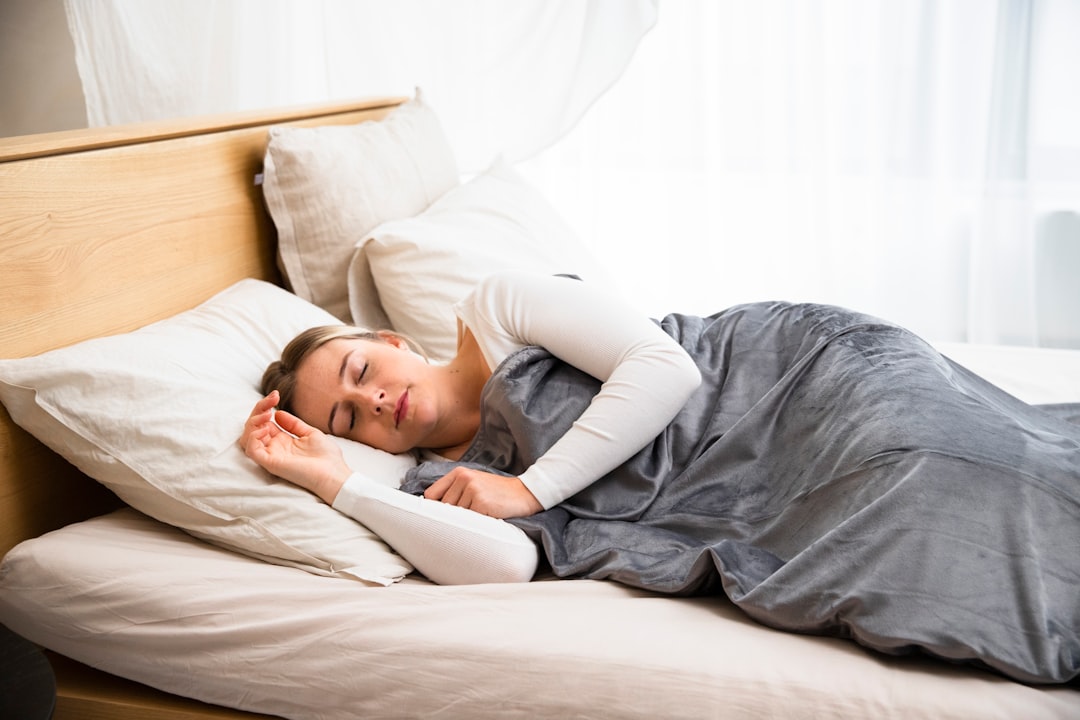
Your hip is the other critical pressure point in this edge test. While holding the position, assess whether your pelvis tilts or your spine curves unnaturally due to uneven support at the mattress perimeter. A good edge for side sleeping will allow your hip to sink slightly, mirroring the shoulder's contour, so your whole torso stays in a neutral line. If the hip feels unsupported or lifts higher than your shoulder, that misalignment will translate into lower back stiffness over time. The two-minute wait is crucial here—initial comfort can mask a gradual settling that leads to poor alignment, so you need to stay put and let the materials respond.
Singapore's relentless humidity doesn't just affect you; it quietly softens foam over months and years, especially at the edges where ventilation is often poorer. A mattress that feels perfectly supportive in a dry showroom today might become a sagging marshmallow at its perimeter by next year's monsoon season. That's why testing for firmness isn't just about immediate feel—it's a proxy for judging how those materials will hold up against 80%+ ambient moisture. You're looking for a core that resists this softening, one that won't let its edge collapse and leave you sleeping on a slope. Consider this a long-term investment against the climate.
Commit to the full two minutes. A best mattress topper in Singapore is the value route to side-sleeper comfort — foam contours to the body for pressure relief at a lower price than spring builds, and it's lighter and easier to handle. Judge it on foam density rather than thickness, since density decides how long it holds support. Many foam models now add cooling gel for warmer climates. For a side sleeper who wants contouring comfort without the premium-tier spend, a quality foam is a sensible starting point.. It feels awkward lying there in a showroom with other shoppers around, but rushing through thirty seconds won't reveal the true performance. The first minute lets your body heat warm the materials slightly, changing their responsiveness, while the second minute shows whether that changed state still supports you. Many buyers skip this, opting for a quick bounce test, and end up with a mattress that feels great for a week then develops a dreaded edge slump. That time is your best defence against a costly mistake, a simple ritual that separates showroom novelty from genuine nightly comfort. Just lie there and listen to what your body tells you.
You can feel it when you sit on the edge to tie your shoes—the mattress dips, then you slide off a little. That’s the foam giving way. Under $800, edge support is usually just a thicker slab of the same basic foam they use everywhere else. It’s not a separate structure, so it compresses quickly, especially if you’re a side sleeper who starts the night near the edge and rolls inward. After a year or two, you’ll notice the perimeter feels softer than the centre, and that’s a problem because it throws off your alignment.
Move up to around $1,500, and the construction changes. Here, you’ll find reinforced coils or dedicated thicker foam rails built into the sides. These are designed to resist compression, giving you a stable platform to push against when you get up. For side sleepers, this matters more than you might think—if the edge collapses, your shoulder sinks too deep, and your spine curves. A firm perimeter keeps you level, even if you’re sleeping close to the edge to share a Queen with a partner.
The real shift happens above $2,400. In this tier, edge support isn’t just reinforced; it’s engineered. Look for high-density latex encasements or multi-zone foam systems that are specifically designed for pressure relief along the sides. These materials don’t just resist sinking; they provide a graduated firmness that supports your hips and shoulders without creating a harsh ridge. It’s a different experience—you can actually use the full width of your 152 by 190cm Queen without feeling like you’re about to roll off.
I’d only skip investing in a good edge if you’re a strict solo sleeper in a Single bed and you never, ever sit on the edge. But for most people in Singapore—side sleepers in a Queen, couples, or anyone who uses the edge as a seat—that perimeter firmness is part of the mattress’s longevity. mattress range in Singapore . A weak edge means the usable sleeping area shrinks over time, and you’re effectively paying for a bed that gets smaller every year. That’s a lousy deal.
Singapore’s humidity, that relentless 80-plus percent, doesn’t just fog your windows—it quietly eats away at the edges of your mattress. You’ll see it first on the perimeter, where you sit to put on your shoes or where you roll off the bed. The foam there softens prematurely, losing its supportive structure within a year or so. It’s a particular problem for side sleepers who need that edge firmness to help them transition from lying down to getting up without feeling like they’re sliding off a cliff. West-facing bedrooms, with their afternoon heat baking through the glass, accelerate this process until the sides feel almost marshmallow-like.
Memory foam, especially the cheaper, lower-density varieties, is the worst offender in this climate. It’s designed to contour, but the constant moisture and heat make it lose its resilience faster. The perimeter collapses, and you end up sleeping on a smaller effective surface than you paid for. Gel-infused memory foam can help a bit—the gel is meant to regulate temperature and add some structural integrity—but it’s still foam at its core. For a real difference, you want to look at latex. Natural or synthetic latex has a springier, more elastic structure that resists sagging even in sustained humidity. It holds its shape at the edges, providing a consistent sitting and transition surface year after year.
There’s a counterintuitive point here: a mattress that feels perfectly supportive in a cool, dry showroom might fail in your actual bedroom environment. If your current mattress is too firm for side sleeping, the guide to the Somnuz offers a cheaper fix than replacing it — a memory foam, latex, or gel topper adds a contouring, pressure-relieving layer over a hard mattress. It's the practical middle path for a side sleeper stuck with a too-firm bed, or anyone wanting to soften a mattress before committing to a new one. The topper does much of what a softer mattress would, at a fraction of the cost.. You can’t judge edge support by a five-minute test in a controlled space. Ask about the foam density and the core materials specifically around the perimeter. Some designs use a firmer foam or a reinforced border construction, which is a smart move for our conditions. That extra bit of engineering around the edges is what keeps a Queen bed feeling like a proper Queen even after the monsoon season rolls through.
The one real exception? If your bedroom is consistently air-conditioned, you’ve essentially created a temperate zone. The humidity and heat stress are drastically reduced, so standard foam edges might hold up fine. But for most flats, especially those older units or BTOs where the bedroom isn’t sealed and cooled all day, the climate is a constant test. In those cases, a material like latex, or a mattress built with a reinforced perimeter, is the safer bet. You won’t regret the extra investment when you’re still sitting comfortably on the edge of your bed three years down the line.
" width="100%" height="480">How to assess mattress edge firmness for comfortable side sleepingA mattress for side sleepers needs softer comfort layers to cradle the shoulders and hips. Higher-density memory foam or latex provides the necessary contouring without bottoming out, which is crucial for spinal alignment. In Singapore's humid climate, look for foams with good breathability and moisture-resistant covers to prevent heat retention and maintain material integrity over time.
Queen-size mattresses, measuring 152x190cm, are the most common fit for HDB and condo master bedrooms. It's vital to leave at least 60cm clearance on the exit side for making the bed and moving around. Before buying, measure your bedroom door and corridor turns, as the HDB lift door—often around 90cm wide—can be the tightest access point.
A mattress with a fancy Euro-top layer looks luxurious, but it’s a trap if the edge isn’t built to match. That plush overhang creates a soft, collapsing perimeter—you’ll literally slide off when you sit on the edge to get up, or when you naturally roll toward the side of a Queen bed. For a side sleeper, that’s a real problem. Your shoulder or hip needs consistent support across the entire sleeping surface, not just a firm centre that drops away at the borders. The correction is simple: ensure the comfort layer is integrated into the edge system. Look for a mattress where the plush top is part of a unified edge-reinforcement design, not a separate pillow that’s just draped over a weaker base.
Testing only the centre of a mattress in a showroom is another classic error. Everyone does it—they lie down in the middle, feel the cushioning, and think they’ve got the full picture. But you spend a lot of time near the edge. In a typical HDB master bedroom, you might be sleeping closer to one side to share the space, or you’ll sit on the edge every morning. If that perimeter sinks and feels unstable, the whole bed feels smaller and less secure. So, when you’re at a showroom, make a point of sitting squarely on the edge. Put your full weight there, like you’re getting up. Then lie down near the side, mimicking how you actually sleep. Does it hold you? Or does it feel like you’re about to roll off a cliff?
There’s honestly only one exception to this rule. If you’re buying a bed strictly for a single sleeper in a very spacious room, and you never, ever sit on the edge or sleep near it, then a weaker perimeter might be tolerable. memory foam versus hybrid guide . But for most Singapore setups—a Queen in a ~3.5x3m BTO master bedroom, shared by a couple, or used by a pregnant woman advised to sleep on the left side—strong edge support isn’t a luxury; it’s a necessity for daily comfort and safety. Don’t let a showroom’s central comfort test fool you. The edges matter just as much.
You’re looking for a mattress that won’t collapse when you roll onto the edge at night. That’s the one thing you can’t decide from a webpage or a specs sheet—you have to feel it yourself. The difference between a mattress that holds you up and one that lets you sink down is something you register with your own body weight, not by reading a product description.
So you’ll want to go to a showroom and perform a simple test. Sit squarely on the edge of a Queen-size bed, as if you’re reading or getting up. Then lie down right along the perimeter, mimicking how you’d actually sleep near the side. A side-sleeper pick sits within the wider queen size , so it's worth seeing the full spread of memory foam, latex, and hybrid options before deciding. The range is organised so you can filter to the contouring, softer-to-medium-firm builds that suit side sleeping. Browsing it shows how the pressure-relieving options compare on feel and price. Choose the construction and firmness for how you sleep, and the rest of the decision is size and budget.. A good edge support will keep you feeling secure, not like you’re about to slide off. A weak one will compress too much, leaving you with that unsettling ‘bottoming out’ sensation where the foam gives way completely. That’s a deal-breaker for side sleepers who need consistent support from the centre all the way to the edge.
This is especially crucial if you share a bed. When one person sleeps near the edge, a poorly supported perimeter can create a noticeable dip, which affects both sleepers. It’s also a practical point for getting in and out of bed comfortably every day. A firm edge makes that daily movement easier and more stable.
You can get a sense of the overall comfort layers and softness online, but the integrity of the border is a physical verdict. It’s a check worth making in person, because that’s where you’ll find out if the promise on the label translates to real support on the frame. For side sleepers, whose shoulders and hips need relief without compromise, this isn’t a minor detail—it’s a core part of the mattress’s performance.
Can edge support fix shoulder pain side sleeping? Edge support isn’t a cure for shoulder pain, but a good edge can prevent the problem worsening. When you sink off the side of a weak mattress, your shoulder gets pushed out of alignment. A firm perimeter keeps you centred on the comfort zone, where the softer layers do their job of contouring around your shoulder and hip. So it’s about containment—keeping the pressure relief working where it’s designed to work.
How long does mattress edge last in HDB humidity? Humidity is the real test. That foam or fibre edge reinforcement can soften and sag over time if it’s not properly sealed or if the core material isn’t dense. In our climate, a well-made edge with high-density foam and a moisture-resistant cover should hold its shape for years. Look for one that feels solid when you sit on the corner—not just firm on day one, but without that spongy, damp feeling that hints it’ll give up sooner.
Is firm edge bad for pregnant side sleepers? Actually, a firm edge is a safety feature for pregnant side sleepers. You need that secure perimeter when you’re shifting position at night, especially as you get larger. A soft, collapsing edge makes you feel like you might roll off, which isn’t restful. The key is the mattress centre still being medium-soft to cushion your hips and shoulders—the firm edge just gives you a confident boundary to sleep within.
What mattress edge type for 3-room BTO small bedroom? In a compact 3-room BTO bedroom, you’ll likely use the edge. Sitting on the bed to read or fold laundry happens because floor space is limited. A reinforced foam edge or a solid perimeter frame gives you that usable surface without the mattress buckling. Avoid a pronounced roll-off edge that eats into your walking space; you want a firm transition that maximises the usable sleeping surface. That way, your Queen bed doesn’t feel like it’s swallowing the room.
The showroom floor is a fantasy land. You’ll see a perfectly staged Queen bed floating in a spacious vignette, not crammed against the wall of a 12 sqm BTO common bedroom. That’s where your reality check begins. Before you even step out, grab your tape measure and verify the actual footprint your new mattress will occupy. If the bed sits flush against a wall, you’re losing the luxury of walking around it—the edge becomes your primary landing pad every single night.
For side sleepers, this is critical. Your typical sleeping position dictates how close you’ll be to that perimeter. If you tend to roll toward the edge, or if you’re a pregnant woman advised to sleep on your left side, you’re essentially sleeping on the border every night. A weak edge there means you’ll feel like you’re sliding off, even if the centre of the mattress is perfectly cushioned for your shoulders and hips. That hidden rail construction, the internal reinforcement around the perimeter, determines long-term comfort more than any quilted top or fancy embroidery.
So prioritise the unseen over the seen. A mattress with a robust edge support system—often a denser foam border or a reinforced coil encasement—will hold its shape when you sit or sleep near the side. In a 4-room flat where space is premium and the bed is likely wedged against a wall, this isn’t a minor feature; it’s a structural necessity. You can compromise on aesthetic details like piping or a patterned cover, but you cannot compromise on the foundation that keeps you securely on the bed.
The one exception? If you’re a strictly central sleeper who never ventures near the edge, and your bed has ample clearance on all sides. Then, perhaps, edge support becomes a secondary concern. But for most Singapore sleepers in typical bedroom layouts, that’s a rare scenario. Assume you’ll need it. Your final pre-showroom task is to know your measured space and your sleeping habits, then focus your questions squarely on what’s inside the mattress, not what’s on top.